

India is home to incredible biodiversity, which shows wildlife conservation here is about balance and not just beauty. While letting people experience nature up close in sanctuaries and national parks protected by the 1972 Wildlife Act, wildlife tourism now funds habitat protection. But factors like poaching, human-wildlife conflict, and urbanization still threaten many species. Through habitat restoration and anti-poaching efforts, India is working to protect rare species and endangered animals. Here is a list of 10 such protected animals in India and also the best places to witness them.
10 Protected Animals In India
1. Bengal Tiger
The Bengal Tiger is known as the supreme monarch of the Indian wilderness and symbolizes beauty, strength, and ecological health. As one of the celebrated and protected species in India, this powerful big cat plays an important role in maintaining the structural balance of forest ecosystems. Illegal poaching and historical habitat loss reduced their numbers dramatically during the 20th century. This led to the landmark launch of Project Tiger in 1973. At present, tiger populations have shown a remarkable recovery across the reserves because of community awareness, aggressive state protection, and dedicated forest corridors. Observing a wild Bengal Tiger roaming around or resting is the ultimate thrill of Wildlife Tourism in Asia.
Where to spot them: Ranthambore National Park, Bandhavgarh National Park, Kanha Tiger Reserve, and Jim Corbett National Park
2. Asiatic Lion
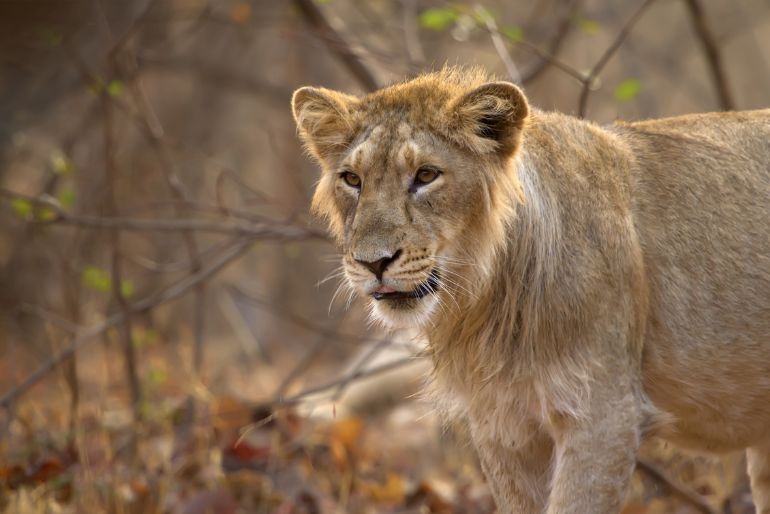
The Asiatic Lion is a magnificent big cat that is slightly different from its African counterpart. Slightly smaller stature, shorter or darker mane in males, and a distinct fold of skin running along its belly are some factors of distinction. This pride of Indian wildlife used to roam around the vast stretches of Southwest Asia and Northern India before being pushed to the brink of extinction. This happened in the 20th century due to excessive hunting. Today, the entire global population of wild Asiatic lions exists in one single enclave in Gujarat, representing one of the biggest success stories of Wildlife sanctuaries in India. These territorial predators inhabit teak woodlands and dry deciduous forests. They are one of the most fragile endangered animals in India as their entire population is concentrated in one spot.
Where to spot them: Gir National Park and Wildlife Sanctuary in Gujarat
Also Read: Best Time To Visit Wildlife Sanctuaries In India: A Seasonal Guide
3. Indian One-Horned Rhinoceros
The Indian One-Horned Rhinoceros is a magnificent Megaherbivore with a single prominent horn. It is characterized by armour-like, thick grey skin folds and distinct warty skin bumps. This prehistoric-looking mammal is one of the most iconic rare animals in India. It primarily grazes aquatic plants, tree saplings, and tall elephant grasses along fertile river valleys. Its historical range across the Gangetic Plains was severely depleted because of intensive historical hunting for its horn and agricultural encroachment. Conservationists saved this species from imminent disaster through rigorous enforcement of non-negotiable anti-poaching measures. This giant remains a crowning highlight of Wildlife in India.
Where to spot them: Manas National Park, Pobitora Wildlife Sanctuary and Kaziranga National Park in Assam.
4. Indian Elephant
The Indian Elephant is a gentle, highly intelligent giant and a fundamental keystone species that disperses seeds, reshapes forests and creates paths for other fauna. These majestic pachyderms are critical animals protected under Indian law through specialized programs like Project Elephant. They move in matriarchal herds and migrate through vast forested ecological corridors to find freshwater and food across seasons. Habitat fragmentation caused by agricultural expansion and linear infrastructure poses a huge challenge, making these giant Indian endangered species important to protect. Encountering a herd of Indian elephants drinking, foraging, and bathing together is widely considered one of the most moving experiences in tropical eco-adventures.
Where to spot them: Nagarhole National Park and Bandipur in Karnataka, Periyar National Park in Kerala, and Kaziranga National Park in Assam
5. Snow Leopard
Known as the “Ghost of the Mountains”, the elusive Snow Leopard is an extraordinary big cat that is adapted to live in rugged, high-altitude, harsh landscapes of the Himalayas. It is among the most sought-after rare animals in India. It is characterized by its thick, smoky-grey fur, dark rosettes, long, heavy tail used for balance, and wide paws that act as natural snowshoes. Snow leopards stay in alpine meadows and on barren, steep cliffs. They prey primarily on Himalayan ibex and blue sheep or bharal. In mountain tracking, with extreme weather, secretive behavior, and vast home ranges, spotting a snow leopard is one of the most challenging yet rewarding pursuits. The former hunting zones have now transformed into safe havens for these animals because of local community conservation programs.
Where to spot them: Hemis National Park in Ladakh and Kibber Wildlife Sanctuary in Spiti Valley
6. Great Indian Bustard
The Great Indian Bustard is a majestic, heavy terrestrial bird. It is characterized by a tall body, an unmistakable black crown, a brownish body, and long bare legs. Once widespread across dry grasslands throughout India, it is currently one of the most critically endangered animals in India. There are fewer than 150 individuals remaining in the wild. A catastrophic collapse in their numbers was seen after the historic habitat was converted into agriculture and collision hazards from high-voltage overhead power lines. This bird relies heavily on scrub ecosystems and open dry grassland for breeding. It forages on insects, small reptiles and seeds. Power line mitigation projects and specialized conservation breeding facilities are working their way to save these birds.
Where to spot them: Desert National Park near Jaisalmer
7. Lion-Tailed Macaque
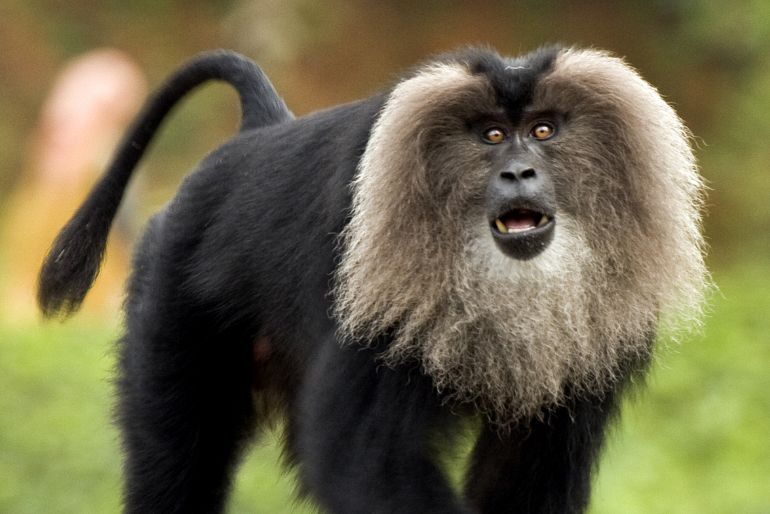
The Lion-Tailed Macaque is an arboreal primate that is easily distinguished because of its features. It includes a tufted tail resembling a lion and a silver-white mane that surrounds its dark face. This animal is found in the fragmented rainforest patches of the Western Ghats. It represents one of the most specialized Indian endangered species. Unlike the other macaque species that adapt well to human habitats, this one avoids human contact. It spends its entire life in high forest canopies feeding on insects, seeds, and fruits. Its habitat was fragmented by forest destruction due to tea and coffee plantations. This made the isolated canopy bridges vital for their survival.
Where to spot them: Anamalai Tiger Reserve in Tamil Nadu and Silent Valley National Park in Kerala
8. Gharial
The Gharial is a fish-eating, unique crocodilian. It is characterised by its extremely long, slender snout with sharp teeth that interlock, designed to catch fish. Adult males develop a bulbous nasal growth at the tip of their snout known as ‘ghara’. They serve as a sound resonator during the courtship displays. Gharials are threatened by sand mining along nesting banks, river pollution, and destructive fishing nets. They are key animals protected under Indian law under Schedule I status. For their nesting and basking needs, riverine sanctuaries with deep, fast-flowing rivers and exposed sandbanks are both needed. Reintroduction programs and captive breeding have played an important role in stabilising their population.
Where to spot them: The National Chambal Sanctuary
9. Nilgiri Tahr
The Nilgiri Tahr is an agile, stocky wild mountain ungulate. It is endemic to the high-altitude shola forest cliffs and montane grasslands of the Southern Western Ghats. The adults feature coarse dark coats and curved backwards horns. The adult males, known as saddlebacks, develop a prominent grey patch across their lower back. As one of the known protected wildlife species in India, they are extraordinarily adapted to navigating sheer rocky precipices. This was done to escape predators like dholes and leopards. Habitat degradation and historical hunting severely reduced their numbers. But in recent years, their population has reached successful stabilization through dedicated sanctuary protections.
Where to spot them: Eravikulam National Park
Also Read: International Day Of Biological Diversity 2026: Best Wildlife Safaris Around The World
10. Red Panda
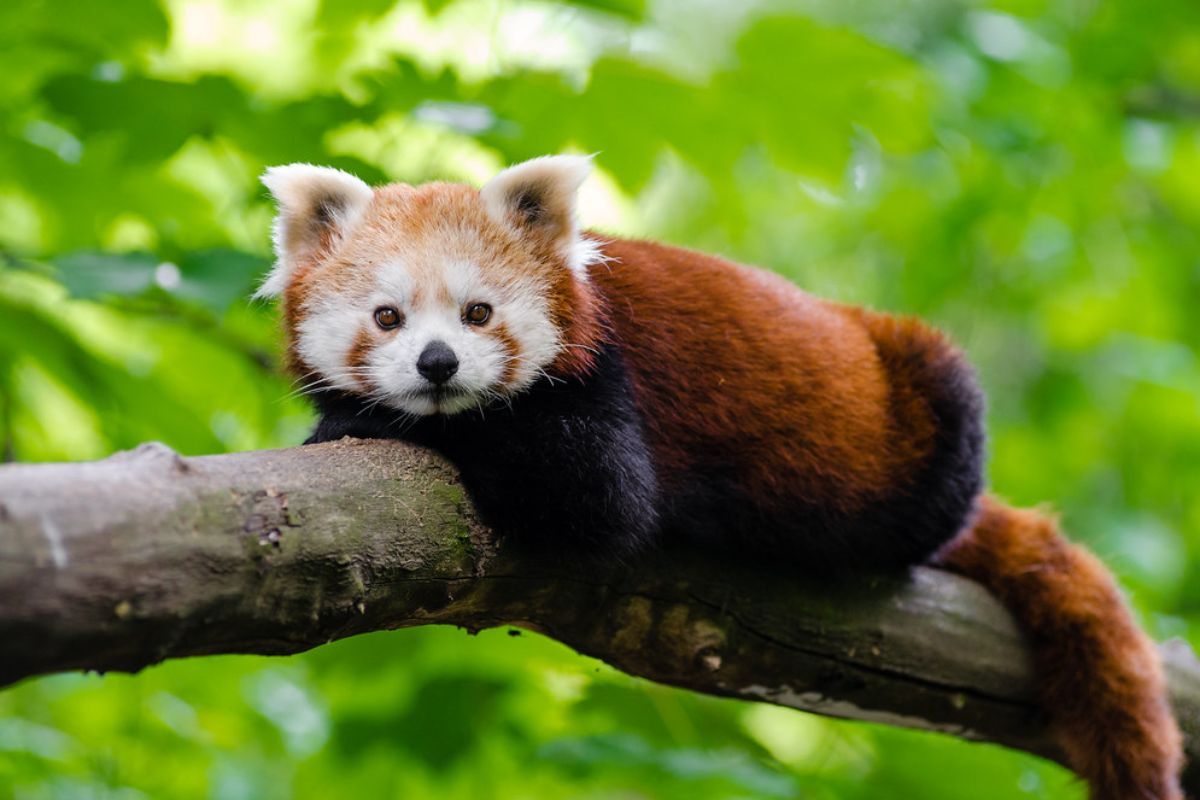
The Red Panda is an arboreal and solitary mammal endemic to the high-altitude temperate forests of the Eastern Himalayas. The Red Panda, even if it shares a name and has a passion for bamboo, is not even closely related to your true bears or pandas. It is the sole living member of the Ailuridae, a unique evolutionary family. The animal is the size of a large domestic cat, has white facial markings, a long, bushy ringed tail, and thick reddish-brown fur. It is classified as endangered with a declining global population estimated at under 10,000 individuals. It is protected under Schedule I of the Wildlife Protection Act, 1972. The biggest threats to their population are habitat fragmentation, accidental snaring, climate change, and deforestation.
Where to spot them: Singalila National Park, Neora Valley National Park, Nokrek National Park.
Summing Up
Responsible Wildlife Tourism acts like a bridge between rural conservationists and urban travelers. While planning your trips to any of the above-mentioned National Parks in India or Wildlife Sanctuaries in India, to see these animals, visitors must adhere to some strict rules.