
Situated on the sacred banks of the Yamuna River in Uttar Pradesh is the holy city of Mathura. It is known as one of the seven holy cities, or Sapta Puri, in Hinduism and also the birthplace of Lord Krishna. A trip to this city offers every traveler an immersion into the magnificent temple architecture, ancient history, deep spiritual traditions, and vibrant cultural heritage. With serene river ghats, divine shrines, and historic stepwells, we have listed some amazing places that you must visit in Mathura for a wholesome experience.
Places to Visit in Mathura
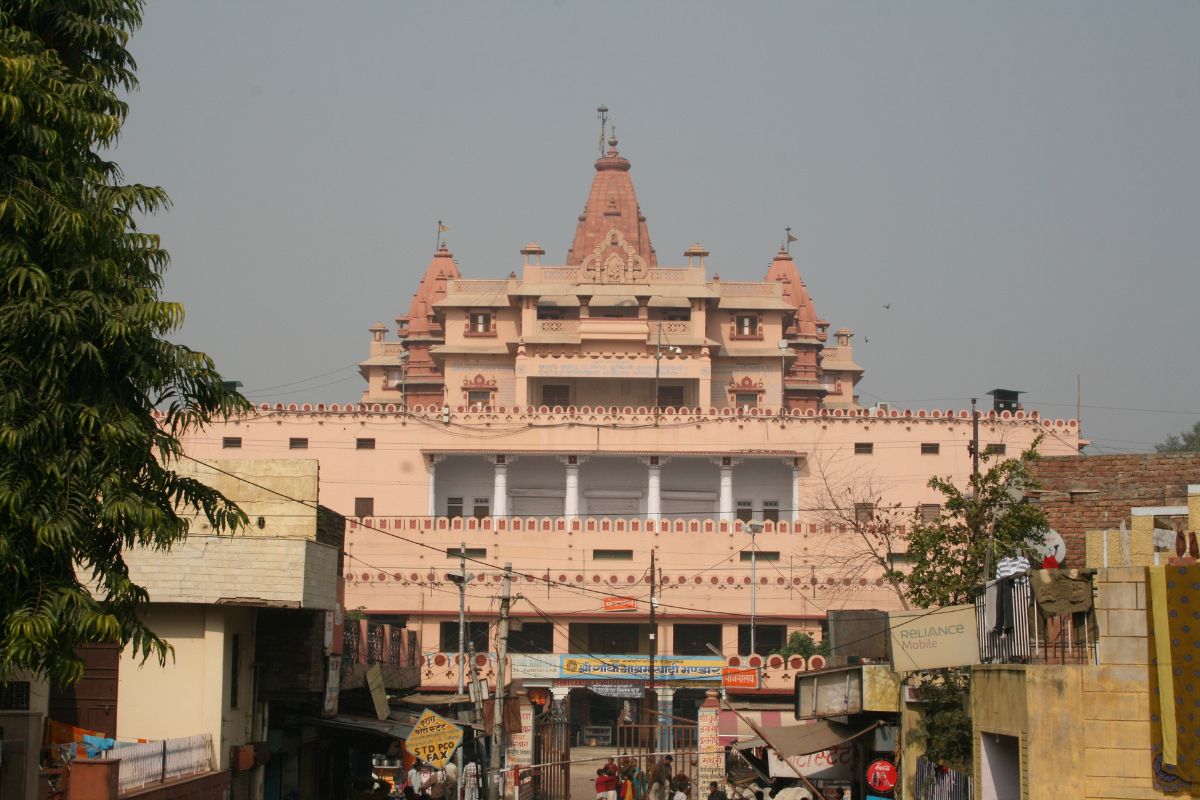
1. Shri Krishna Janmabhoomi Temple Complex
Shri Krishna Janmabhoomi Temple Complex is known as the spiritual heart of the city. It marks the exact prison cell or Garbha Griha where Devaki gave birth to Lord Krishna. The sacred complex houses multiple shrines, including Bhagvat Bhavan, Keshavdev Temple, and the ancient prison chamber. Visitors can admire hand-painted murals depicting scenes from the Bhagavata Purana, magnificent marble carvings, and beautifully crafted idols of Krishna and Radha. The atmosphere becomes spiritual and energetic during Holi and Janmashtami as thousands of pilgrims come here for prayers and special rituals. It is one of the most famous temples in Mathura to visit for every Krishna devotee.
2. Dwarkadhish Temple
The Dwarkadhish Temple is one of the oldest and most grandly designed temples in Mathura. Located near Raja Dhiraj Bazaar and Vishram Ghat, it was constructed in 1814 by Seth Gokul Das Parikh. The temple is dedicated to Lord Krishna in his regal persona as Dwarkadhish, “King of Dwarka.” The shrine shows the beauty of striking Rajasthani-style architecture completed with a carved central courtyard, ornate pillars and painted ceilings. The inner sanctum of the temple houses Lord Krishna’s black marble idol and Radharani’s white marble idol adorned in seasonal attires. During Shravan month, the Jhulan yatra or swing festival is celebrated here with daily aarti sessions. The surrounding markets offer traditional handicrafts and authentic street delicacies.
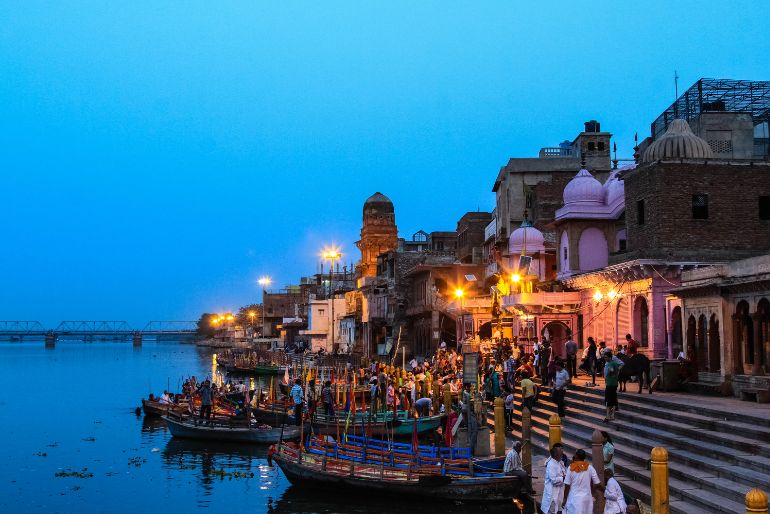
3. Vishram Ghat
There are about 25 sacred ghats that line the Yamuna River in Mathura, and Vishram Ghat happens to be the central focal point. According to legend, it is believed that Lord Krishna rested at this riverfront spot to cleanse himself and celebrate his victory after slaying the ruler and his uncle, King Kans. The stone steps lead down to the river waters where devotees take holy dips and hire wooden rowboats for river tours. One of the most amazing experiences at this ghat is the grand Yamuna aarti that is conducted twice every day. Dozens of brass lamps are illuminated while the chants by the priests echo across the water. The ghat is surrounded by antique sweet shops and historic temples.
4. Gita Mandir (Birla Temple)
Gita Mandir, which is popularly known as Birla Temple, is a peaceful spiritual retreat that was constructed by the industrial Birla family. It is known for the inscription of all 18 chapters and 700 verses of the Bhagavad Gita on the marble pillars that surround the main shrine. The central garden area features a large pillar dedicated to Lord Krishna alongside finely sculpted idols of Ram-Sita, Lord Krishna, and Lord Lakshmi-Narayan. It is surrounded by well-maintained pathways and landscaped gardens that offer a calm space that offers meditation and quiet contemplation away from the crowded places. This landmark adds a spot that shows modern architectural beauty to the itinerary.
5. Government Museum Mathura
The Government Museum Mathura is a well-known institution for iconography and sculpture. It was established by Sir F.S. Growse in 1874 and is located at Dampier Nagar. It houses beautiful artifacts from the 3rd century BCE to the 12th century CE. They are known to highlight the golden age of the Kushan and Gupta Dynasties. The museum showcases masterpieces of the Mathura School of Art. This includes a headless statue of King Kanishka and red sandstone sculptures of Lord Buddha and Tirthankars. Visitors can take a look at the terracotta figurines, centuries-old paintings, preserved ancient coins, and pottery. This site offers great insight into the artistic evolution and Greco-Buddhist cultural influences.
6. Kans Fort or Kans Qila
Kans Qila is located near Vishram Ghat and Ratan Kund. It represents the historic fortification that is said to be associated with King Kans. The current structural ruins show the blend of Hindu and Mughal architectural styles. It was renovated by Raja Man Singh I of Amber in the 16th century. The fort contains ancient defensive walls, red sandstone audience halls, and elevated platforms. These platforms help in getting elevated views across the river. An astronomical observatory was constructed within the complex later by Maharaja Sawai Jai Singh II of Jaipur. It is the perfect place for history buffs and people who wish to escape chaos.
Also Read: The Best Travel Guide To Mathura
7. Govardhan Hill
Giriraj parbhat or Govardhan hill holds a lot of religious significance. According to Hindu mythology, Lord Krishna had lifted the entire Govardhan hill on his pinky finger for seven days. He did so to protect all the villagers from the torrents of rain sent by Lord Indra. Throughout the year, millions of devotees visit this place to complete the 21-kilometer Govardhan Parikrama. It is a barefoot circumambulation around this holy hill. The hill is made out of sandstone and has sacred ponds, temples, and quiet ashrams along the marked path. Some important stops include Mukharbind temple, Dan ghati shrine, and Manasi Ganga.
8. Kusum Sarovar
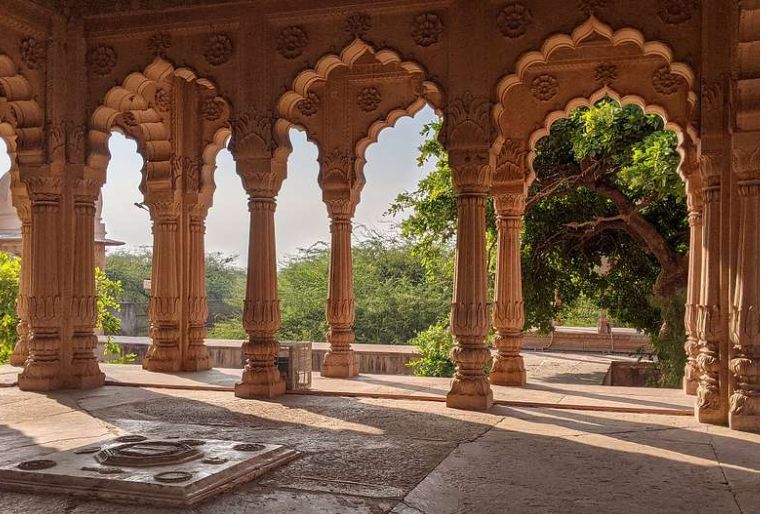
Kusum Sarovar is a magnificient 450-foot long rectangular stone stepwell. It is located right between Govardhan and Radha Kund. The sarovar is encircled by the grand chatris or cenotaphs of the Bharatpur royal family. According to mythology, Radha and her friends gathered wildflowers from the banks and crafted garlands for Lord Krishna. It is built using ornamental red sandstone with elaborate structures that feature painted ceilings and depict divine pastimes of Lord Krishna and historical events from Rajasthan. The waters reflect the historic arches, making it one of the scenic spots in Braj for photographers. Its upper terrace offers the best sunset views.
9. Chamunda Devi Temple
Near Masani Railway Station along the Mathura-Vridnavan highway, there is a temple known as Chamunda Devi Temple. It is known as one of the prominent 51 Shaktipeethas of Goddess Parvati. According to sacred scriptures, it was here where the hair strand of Goddess Sati fell, which made it a powerful center for Shakta and Tantric worship. It is also believed to be the spot where Lord Krishna offered his prayers to Goddess Chamunda after setting her free from demon serpents. Unlike the other temples in central Mathura, this temple is free from commercial stalls and retains a serene, meditative environment. During Navratri, there are special havans that take place here.
10. Radha Kund & Shyam Kund
Radha Kund & Shyam Kund are twin holy water tanks that are located in teh sacred town of Govardhan near Mathura. They represent the deepest essence of divine devotion in Vaishnavism. It is believed that Lord Krishna created the Shyam Kund by striking his heel into the earth after he seated the demon Aristasura. Srimati Radharani created the Radha Kund using her bangles. The two kunds are connected by a narrow embankment. It is lined with small shrines, ancient stepwell staircases, and centuries-old trees. Devotees gather here during Bahulashtami and take a midnight dip. It is believed that doing so grants spiritual blessings and pure divine love.
Summing Up
Mathura is one of those cities in India that must be on every traveler’s list. It is rich in history, filled with mythological connections, houses architectural beauty, and offers spiritual experiences like no other city. We have given you the list of the best places that you must visit on your trip to this city; make sure you save it!
Also if you want a complete travel guide to Agra or the best area to stay in Agra, you must check out our website.