

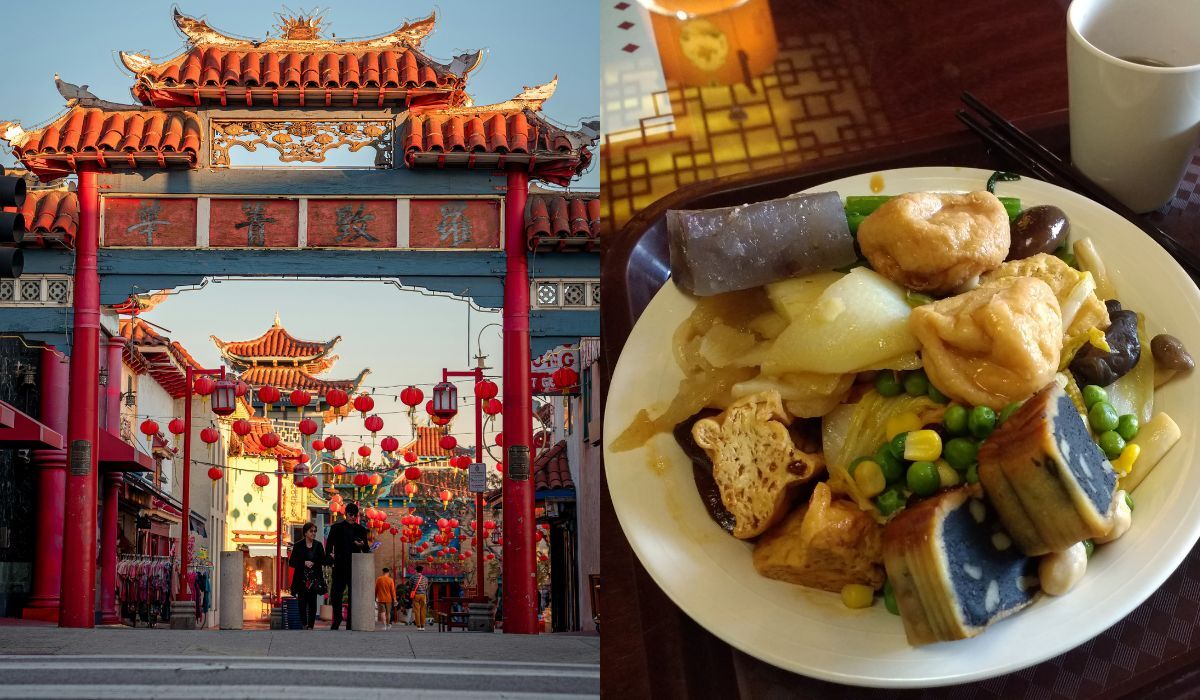
Many Indian travelers still believe that China is one of the world’s most difficult destinations for vegetarians. The concern is understandable, especially for those who strictly avoid meat, eggs, seafood, or even animal-based broths. Stories of “vegetable” dishes cooked with pork fat or soups made using meat stock have reinforced the myth that eating vegetarian in China is nearly impossible. The reality is far more encouraging. China has a centuries-old Buddhist vegetarian tradition known as Sùshí (素食), and major cities now offer an expanding range of dedicated vegetarian and vegan restaurants. This unstumbled guide explains the cultural nuances behind vegetarian food in China, essential Mandarin phrases, safe local dishes, city-wise restaurant recommendations, and the digital tools that make dining much easier for Indian travelers.
What Does Vegetarian Food In China Mean?
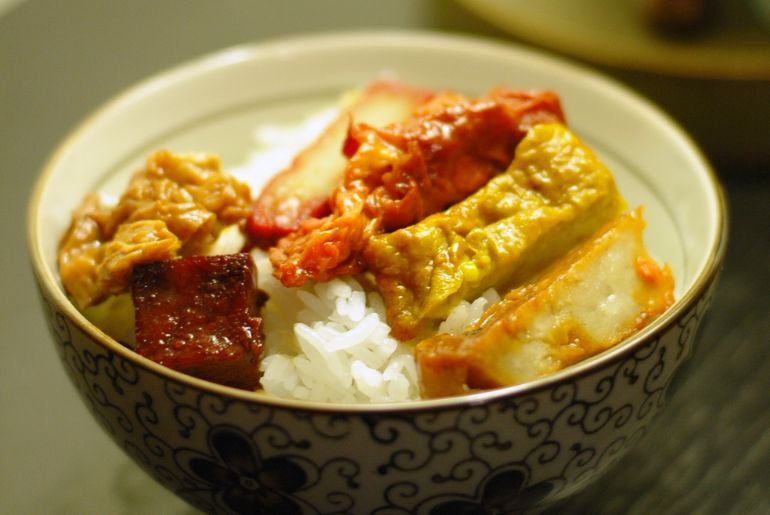
One of the biggest challenges is that the Chinese understanding of “vegetarian” may differ from what many Indians expect. In many traditional home-style kitchens, vegetables are commonly stir-fried using small amounts of minced pork, pork lard (zhūyóu/猪油), chicken powder (jījīng/鸡精), oyster sauce, seafood stock, or fish sauce simply to enhance flavor. The finished dish may still appear to contain only vegetables, making these hidden ingredients easy to miss.
The safest choice is to look for restaurants advertising 素食 (Sùshí) or 素菜馆 (Sùcàiguǎn). These are Buddhist vegetarian restaurants. Traditional Buddhist vegetarian cuisine excludes meat, poultry, seafood, and animal fat. Many Buddhist establishments also avoid the “five pungent vegetables” (garlic, onions, leeks, chives, and shallots), making them suitable for many Jain-style dietary preferences. However, practices vary by restaurant.
Tier-1 cities such as Beijing, Shanghai, Guangzhou, and Shenzhen, and commercial hubs like Yiwu, also have numerous vegetarian-friendly establishments. These include Buddhist eateries, Indian restaurants, and modern plant-based cafés. Even outside dedicated vegetarian restaurants, many Chinese establishments are willing to customize dishes if dietary requirements are communicated clearly. Hence, knowing what to say to such establishments is crucial. If avoiding onions and garlic is important, always mention it explicitly rather than assuming it is standard.
When eating at ordinary Chinese restaurants, never rely solely on the English word “vegetarian.” Instead, specify exactly what you cannot eat. If you do not consume eggs, clearly state “Bú yào jīdàn” (不要鸡蛋/No eggs). Likewise, if you avoid animal fats, request “Bú yào zhūyóu” (不要猪油/No lard). Asking for no chicken powder and no meat broth provides an additional layer of safety because these ingredients are widely used in everyday cooking.
Important Chinese Phrases To Learn
Saving the following phrases on your phone or printing them on a small translation card can make ordering much easier.
- I am vegetarian: 我吃素 (Wǒ chī sù)
- I don’t eat meat, seafood, or eggs: 我不吃肉,海鲜,鸡蛋 (Wǒ bù chī ròu, hǎixiān, jīdàn)
- No lard/animal fat: 不要猪油 (Bú yào zhūyóu)
- No fish sauce/chicken powder: 不要鱼露 / 鸡精 (Bú yào yúlù/jījīng)
- Pure vegetarian or Jain-friendly (No onion and garlic): 纯素,不要葱姜蒜 (Chún sù, bú yào cōng jiāng suàn)
If ordering noodle soups, it is also helpful to ask: 这是不是肉汤? Or “Zhè shì bú shì ròu tāng?” (“Is this made with meat broth?”)
Safe Local Chinese Dishes Vegetarians Can Order
Chinese cuisine offers many naturally vegetarian dishes, provided a few modifications are requested.
1. Vegetarian Mapo Tofu
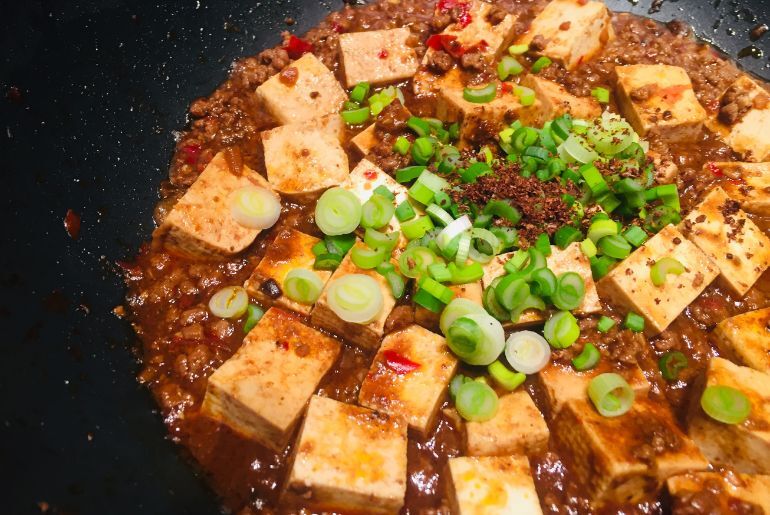
Mapo tofu traditionally contains minced pork, but many vegetarian restaurants serve Sù Mápó Dòufu using tofu, mushrooms, and fermented bean paste instead. At regular restaurants, request 无肉 (Wú ròu), meaning “no meat.”
2. Tomato Scrambled Eggs
If you eat eggs, Fānqié Chǎodàn is one of the safest and most widely available dishes throughout China.
3. Dry-Fried Green Beans
This Sichuan favorite often includes minced pork. Request 不要肉 (No meat) before ordering.
4. Vegetarian Baozi And Dumplings
Look for: 素包子 (Sù Bāozi) or vegetable buns, 素饺子 (Sù Jiǎozi) or vegetable dumplings. Common fillings include mushrooms, cabbage, tofu, carrots, and Chinese greens.
5. Vegetarian Hand-Pulled Noodles
Sù Lāmiàn is available in many cities, but always confirm the noodles are served in vegetable broth rather than pork or beef stock. Even when ordering these dishes, it remains good practice to remind staff that you do not eat meat, seafood, chicken powder, or lard.
Best Cities For Indian And Vegetarian Food In China
1. Guangzhou
As China’s largest trade hub and home of the Canton Fair, Guangzhou has one of the country’s strongest Indian dining scenes. Popular choices include:
- Sharmaji Indian Veggie Restaurant, located within the Baiyun Hotel complex, is well known among Indian business travelers for North Indian vegetarian meals.
- Bombay Grill, near Taojin Metro Station, serves vegetarian curries, biryanis, tandoori breads, and Jain-friendly dishes on request.
The city also has several Buddhist vegetarian restaurants that serve traditional Cantonese vegetarian cuisine.
2. Shanghai
Shanghai offers perhaps the widest range of vegetarian dining in mainland China. Recommended options include:
- Bollywood Indian Restaurant (Pudong)
- Kebabs on the Grille
- Jade Buddha Temple Vegetarian Restaurant, one of Shanghai’s best-known Buddhist vegetarian dining venues, serving mock meats, tofu dishes, noodles, and seasonal vegetables.
The city’s international population also supports numerous vegan cafés and modern plant-based restaurants.
3. Beijing
Indian visitors have several dependable choices in the capital.
- Ganges Indian Restaurant has long been popular with diplomats, expatriates, and tourists.
- King’s Joy is internationally recognized for its refined Buddhist vegetarian cuisine and has received multiple Michelin stars in recent editions of the Michelin Guide Beijing. Reservations are recommended well in advance.
4. Yiwu
Yiwu, famous for the International Trade Market, attracts thousands of Indian traders every year. The neighborhoods around the market feature numerous Indian vegetarian restaurants alongside Middle Eastern eateries offering vegetarian options. Gujarati thalis, Jain meals, Punjabi cuisine, South Indian breakfasts, and vegetarian street snacks are relatively easy to find compared with many other Chinese cities.
Apps That Will Ease Your China Trip Navigation
Technology significantly simplifies traveling across China for vegetarians.
For translation, Google Translate (with offline Chinese language packs downloaded before arrival) remains useful for camera-based menu translation where accessible.
Baidu Translate is a practical local alternative.
To discover restaurants, download Dianping (大众点评), China’s leading restaurant discovery platform, and search for “素食” or “素菜馆” to locate vegetarian restaurants nearby.
Some travelers also use HappyCow as a supplementary directory in major cities, although its China coverage can be inconsistent.
Finally, set up Alipay and WeChat Pay before your trip by linking an eligible international bank card. Mobile payments are widely accepted at restaurants, cafés, and self-service ordering kiosks across China, making dining considerably more convenient.
Also Read: How To Apply For A China Visa As An Indian: Complete Step-by-Step Guide
Summing Up
China is far more vegetarian-friendly than many Indian travelers expect. With a handful of useful Mandarin phrases, careful communication about hidden ingredients, translation apps, and the country’s well-established Buddhist vegetarian restaurants, enjoying delicious meat-free meals across China is both practical and rewarding. The city recommendations are based on establishments that have been consistently recognized or reported as operating through mid-2026, but restaurant ownership, locations, and operating hours can change. It’s advisable to verify current listings or make reservations shortly before your visit.