
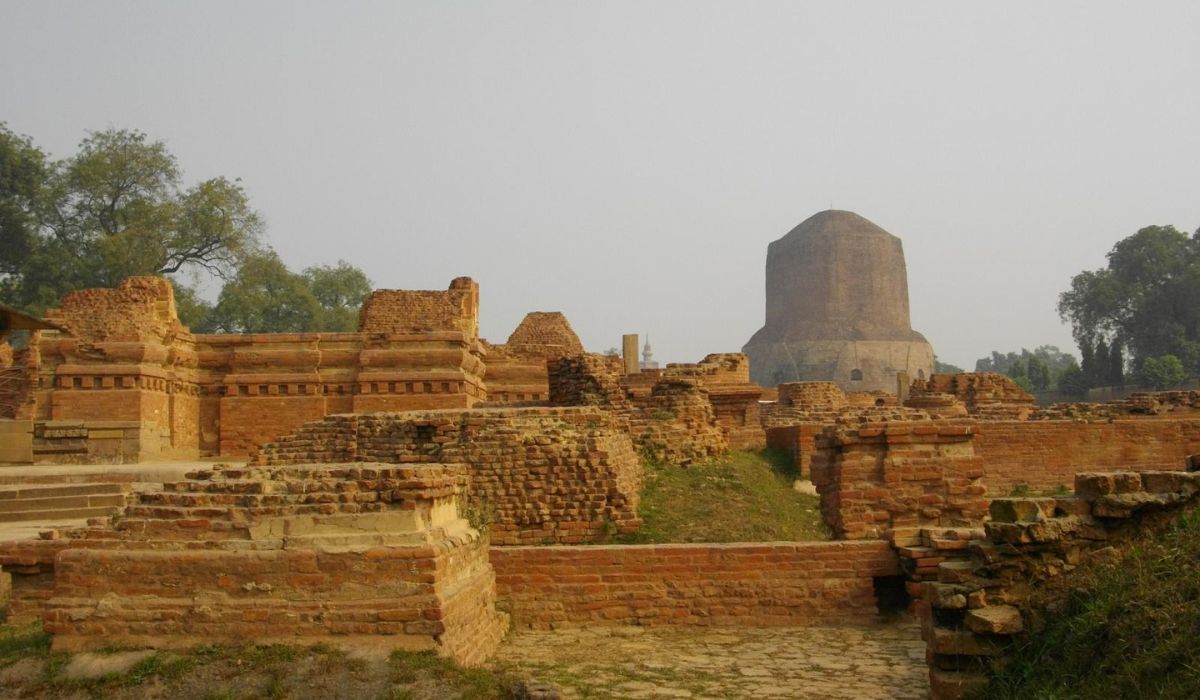
On July 25, 2026, during the 48th session of the UNESCO World Heritage Committee in Busan, South Korea, the ancient site of Sarnath was officially inscribed as India’s 45th UNESCO World Heritage Site. Located around ten kilometers northeast of Varanasi, Sarnath occupies a unique place in world history. According to Buddhist tradition, it was here, in the ancient deer park known as Mrigadava (Deer Park), that Gautama Buddha delivered his first sermon. It is known as the Dhammacakkappavattana Sutta (Setting in Motion the Wheel of Dharma). He gave this sermon after attaining enlightenment at Bodh Gaya. This event marked the beginning of the Buddhist Sangha and the spread of Buddhism across Asia. Today, Sarnath is much more than an archaeological destination. Whether you’re a history enthusiast, spiritual traveller, photographer or UNESCO site collector, Sarnath deserves a full day on any Varanasi itinerary. This unstumbled guide covers everything you need to know, including UNESCO-listed monuments, historical significance, travel logistics, accommodation, visiting tips and responsible tourism practices.
UNESCO Recognizes Sarnath As World Heritage Site
Sarnath marks the “Turning of the Wheel of Law” (Dharmachakra Pravartana) and the establishment of the original Buddhist monastic community. It is a living pilgrimage center where ancient stupas stand alongside active monasteries representing Buddhist traditions from across the world. UNESCO recognised Sarnath for its Outstanding Universal Value, highlighting its unparalleled association with the origins of Buddhism and its remarkable archaeological remains spanning nearly 1,500 years.
The site represents the place where Buddha first taught the Four Noble Truths and the Noble Eightfold Path after enlightenment. This moment established the world’s first Buddhist monastic community.
Sarnath flourished between the 3rd century BCE and the 12th century CE, receiving patronage from successive dynasties including Emperor Ashoka, the Kushanas, the Guptas and the Palas. The archaeological remains preserve evidence of continuous religious activity through monasteries, temples, stupas and sculptural masterpieces. The UNESCO inscription covers two principal components:
1. Archaeological Remains of Sarnath
This protected complex includes the Dhamek Stupa, Dharmarajika Stupa, Ashokan Pillar remains, ancient monasteries (Viharas), temples, and archaeological structures.
2. Chaukhandi Stupa
Located south of the main complex, this monument commemorates the place where Buddha reunited with the five ascetics who later became his first disciples. Together, these monuments represent one of the most important sacred landscapes in Buddhist history.
Top UNESCO Monuments To Visit In Sarnath
1. Dhamek Stupa
The Dhamek Stupa is the visual and spiritual centerpiece of Sarnath. Standing approximately 43.6 meters high with a diameter of nearly 28 meters, the cylindrical structure marks the traditional location where Buddha delivered his first sermon.
Although the original foundations date back to Emperor Ashoka, much of the visible structure reflects later reconstructions, particularly during the Gupta period. Visitors should look closely at the beautifully carved lower stone courses, decorated with geometric patterns, floral motifs, delicate Gupta-era craftsmanship, and intricate relief carvings.
The stupa remains an active place of pilgrimage where monks and devotees perform clockwise circumambulation throughout the day.
2. Ashoka Pillar Ruins And Lion Capital
Among Sarnath’s most historically significant remains is the Ashokan Pillar, erected during the 3rd century BCE by Emperor Ashoka. Although only the pillar base survives at the original site, the monument once supported one of India’s greatest artistic masterpieces, the Lion Capital of Ashoka.
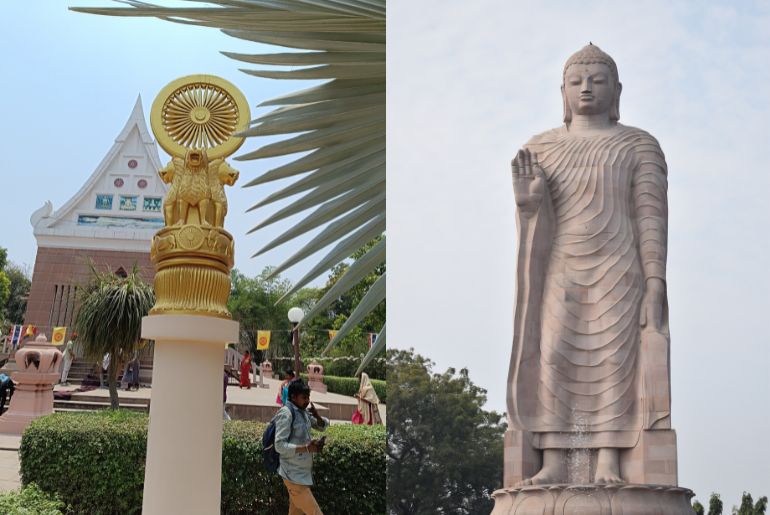
The polished sandstone sculpture features four lions standing back-to-back above a circular abacus decorated with elephants, horses, bulls and lions separated by Dharma wheels. Today, this sculpture has become an enduring symbol of modern India. It serves as the National Emblem of India.
The Ashoka Chakra, derived from the same monument, occupies the centre of the Indian national flag. Seeing the original Lion Capital in the nearby museum provides a powerful connection between ancient Buddhist heritage and contemporary Indian identity.
3. Sarnath Archaeological Museum
Established by the Archaeological Survey of India, the Sarnath Archaeological Museum houses one of India’s finest collections of Buddhist sculpture. Highlights include the original Lion Capital of Ashoka, the celebrated Gupta-era seated Buddha in Dharmachakra Pravartana Mudra, ancient Bodhisattva sculptures, stone inscriptions, terracotta figurines, and architectural fragments recovered during excavations. The museum provides essential historical context before or after exploring the ruins.
Visitor Information
Open: 9 AM to 5 PM
Closed: Fridays
Tickets are available through the ASI ticketing system and at the entrance, subject to current ASI pricing and policies.
4. Chaukhandi Stupa
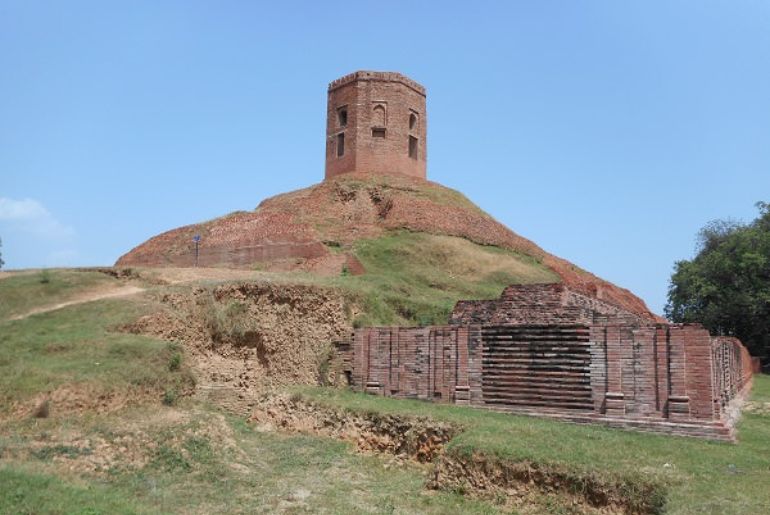
Located before the main archaeological zone, Chaukhandi Stupa is traditionally believed to mark the place where Buddha met his five former companions after enlightenment. Its distinctive appearance combines different historical periods. The lower terraced brick structure dates to the early medieval period, while the octagonal Mughal tower on top was added by Govardhan, son of Raja Todar Mal, to commemorate Emperor Humayun’s visit during the 16th century. Because of its elevated position, it also offers pleasant views of the surrounding landscape.
5. Modern Pilgrimage Landmarks
Beyond the UNESCO-listed remains, Sarnath remains a vibrant center of international Buddhist practice.
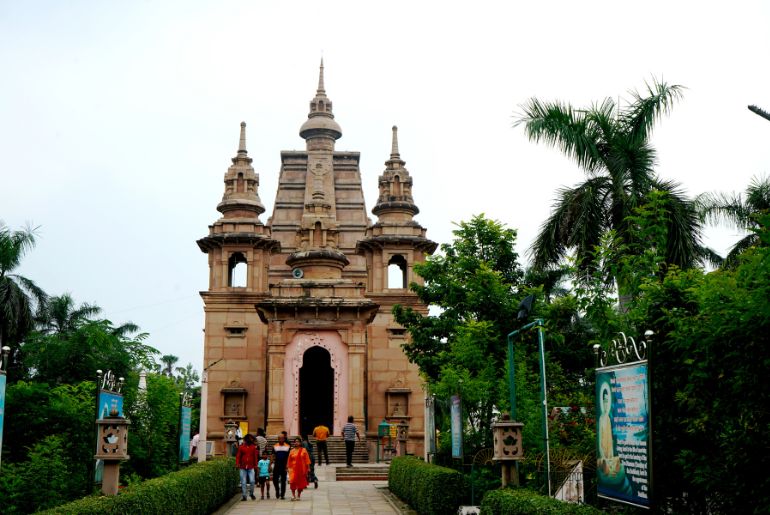
Mulagandhakuti Vihara
Constructed by the Mahabodhi Society in 1931, this temple is renowned for its colourful interior frescoes painted by Japanese artist Kosetsu Nosu, illustrating major episodes from Buddha’s life. The surrounding Deer Park creates a peaceful atmosphere for meditation.
International Monasteries
Several countries have established monasteries in Sarnath, reflecting Buddhism’s global reach. Notable sites include the Thai Temple and Monastery, Tibetan Monastery, Japanese Temple, the Burmese Temple, and the impressive 80-foot Standing Buddha statue. These monasteries showcase diverse architectural styles while remaining active centres of worship.
How To Reach And Other Travel Info
Where is Sarnath?
Sarnath lies approximately 10 km from Varanasi Junction railway station and 24 km from Lal Bahadur Shastri International Airport (VNS). Its close proximity makes it an easy day trip from Varanasi.
How to Reach
Travelers can reach Sarnath by app-based taxis such as Uber and Ola, auto-rickshaws from Godowlia, or Cantonment Public buses operating from Varanasi city. Depending on traffic, the journey usually takes 30 to 45 minutes.
Best Time To Visit
The most comfortable season is October to March, when cooler temperatures make walking through the archaeological complex enjoyable. Visitors seeking a spiritual experience may also consider Buddha Purnima (May), celebrating Buddha’s birth, enlightenment, and Mahaparinirvana, and Kartik Purnima (November), when pilgrim activity increases. Early mornings are ideal for photography and quieter exploration.
Timings, Tickets And Visitor Etiquette
- The archaeological ruins are generally open from sunrise to sunset.
- The museum operates between 9 AM and 5 PM and remains closed on Fridays.
- Visitors should wear modest clothing covering shoulders and knees, especially when entering monasteries or prayer halls.
- Photography is generally permitted outdoors, but visitors should always respect local regulations inside museums and temples.
- Maintaining silence around meditation areas and avoiding climbing on ancient monuments helps preserve both the site’s sanctity and heritage.
One-Day Itinerary For Sarnath Visit From Varanasi
- 8 AM: Depart central Varanasi (Godowlia or Cantonment)
- 8:45 AM: Visit Chaukhandi Stupa before temperatures rise.
- 9:30 AM to 11:30 AM: Explore the UNESCO archaeological complex, including Dhamek Stupa, Ashokan Pillar remains, and monastery ruins.
- 11:45 AM to 1:15 PM: Visit the Sarnath Archaeological Museum.
- 1:30 PM: Enjoy a vegetarian lunch at a local café or monastery restaurant.
- 2:30 PM to 4:30 PM: Explore Mulagandhakuti Vihara, Deer Park, and international monasteries.
- 5 PM: Return to Varanasi in time to attend the evening Ganga Aarti at Dashashwamedh Ghat.
Accommodation And Food Options
Travelers have two main accommodation choices:
Stay in Sarnath if you prefer peaceful surroundings, monastery guest houses and quieter evenings.
Stay in central Varanasi if you want easier access to the ghats, markets and wider dining options while making Sarnath a day excursion.
Food in Sarnath is predominantly vegetarian, reflecting its religious character. Visitors will find North Indian meals alongside Sri Lankan, Thai, Tibetan and Japanese-inspired cuisine catering to international pilgrims. Local cafés near the Mahabodhi Society complex are popular for simple, wholesome meals, while returning to Varanasi offers access to the city’s renowned street food scene.
Conservation And Sustainable Tourism
UNESCO recognition is expected to increase visitor numbers significantly, making conservation efforts even more important. The Archaeological Survey of India continues to manage the site’s preservation through regulated visitor movement, conservation of fragile brick structures, and protection of the archaeological buffer zone.
Visitors can contribute by:
- Avoiding touching or climbing ancient monuments.
- Using designated pathways.
- Carrying reusable water bottles where possible.
- Disposing of waste responsibly.
- Supporting local artisans selling traditional stone carvings, wooden handicrafts and locally made souvenirs instead of mass-produced imports.
Responsible tourism helps ensure that Sarnath’s extraordinary heritage remains protected for future generations.
Also Read: UNESCO Adds Deepavali To Intangible Cultural Heritage List
Summing Up
Sarnath’s elevation to India’s 45th UNESCO World Heritage site confirms its status as a cornerstone of human civilizational heritage. From the monumental Dhamek Stupa and the Ashokan Pillar to world-class Buddhist sculpture and living monasteries, Sarnath preserves the place where Buddhist teachings first entered the world. For travelers visiting Varanasi, dedicating a full day to Sarnath offers far more than a sightseeing excursion. It provides a deeper understanding of India’s cultural heritage and an opportunity to experience the origins of a philosophy that continues to inspire millions across the globe. With its newly recognised UNESCO status, there has never been a better time to explore this remarkable destination with curiosity, respect and appreciation.