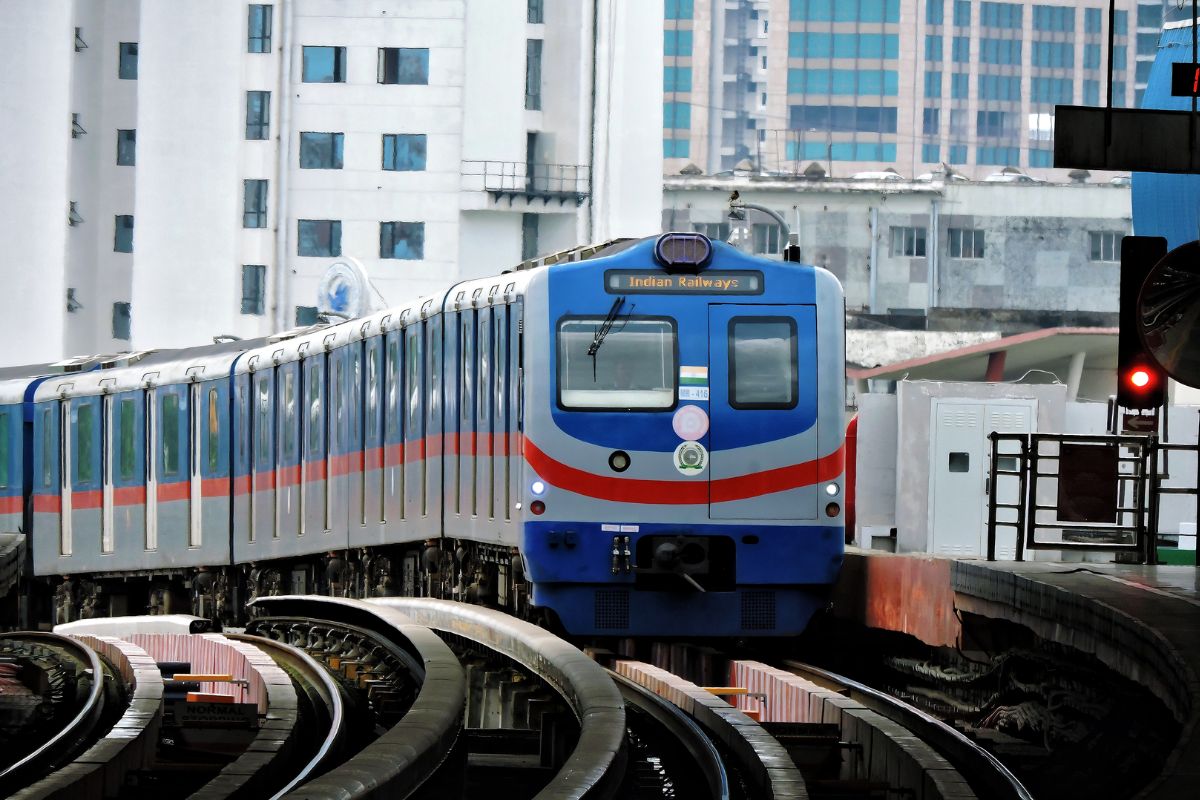

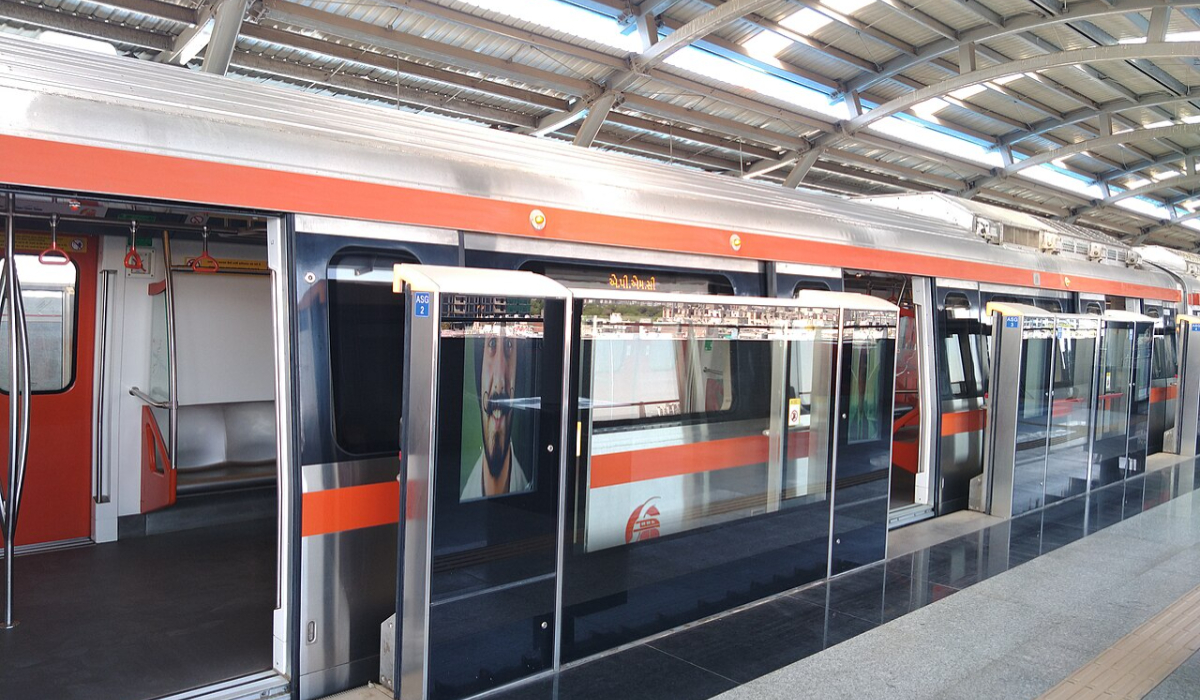
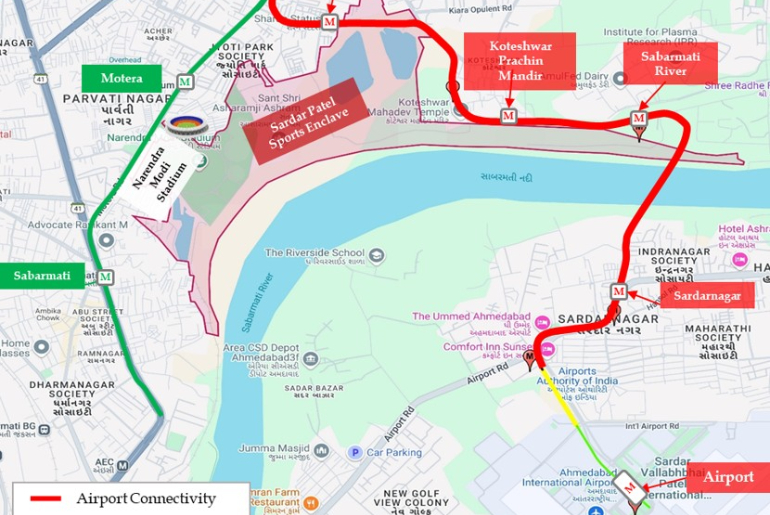
The Union Cabinet, led by Prime Minister Narendra Modi, has approved Phase 2(A) of the Ahmedabad Metro Rail Project, which will span 6.032 kilometers and include five stations – four elevated and one underground. Once this phase becomes operational, the total length of the Ahmedabad-Gandhinagar Metro Network will reach an impressive 77.63 kilometers. The new stations on this corridor – Ashram Road, Koteshwar Prachin Mandir, Sabarmati River, Sardar Nagar, and Airport- will play a key role in enhancing urban mobility.
The overall cost for completing this project, including interest during construction, is projected at Rs. 2,169.04 crore. This major investment is set to revolutionize public transport in Ahmedabad, representing a vital step forward in the city’s infrastructure development.
What Makes This Ahmedabad Metro Useful And Different
One of the main advantages of Ahmedabad Metro’s Phase 2(A) is its potential to improve connectivity across the region significantly. The new Ahmedabad Metro corridor aims to connect the airport to key residential and commercial areas that currently lack efficient public transport options. This interconnectedness between essential hubs and existing transit routes will ease travel for residents and tourists alike.
Additionally, with the upcoming World Police Games in 2029 and the Commonwealth Games in 2030, there are plans to develop sports facilities in proximity to the metro stations.
Also Read: Ahmedabad Airport’s Terminal 2 To Get An Upgrade With A New Domestic Lounge And More
The addition of this metro line is expected to alleviate traffic congestion significantly. As a reliable alternative to road transport, the Ahmedabad Metro will help reduce the number of vehicles on the roads, leading to smoother traffic flow, shorter travel times, and increased road safety.
How Is Ahmedabad Metro’s Expansion More Sustainable
Environmentally, Phase 2(A) of the Ahmedabad Metro is a significant step towards a greener future. By expanding the metro network, there will be a substantial decrease in carbon emissions compared to traditional modes of transport powered by fossil fuels.
From an economic perspective, reduced commute times and better access to vital locations such as the airport, railway stations, and bus depots will enhance overall productivity. The new connectivity has the potential to boost local businesses, particularly around the newly established metro stations, while also attracting further investment to previously underserved areas.
Phase 2(A) of the Ahmedabad Metro Rail Project represents a promising transformation for the city’s public transport landscape. Furthermore, during peak construction, the project is expected to create approximately 2,000 jobs, with 500 additional positions for operations and maintenance after completion.
Also Read: 1-Day Trips From Ahmedabad
Summing Up
Phase 2(A) of the Ahmedabad Metro Rail Project represents a significant milestone in the city’s transportation development. This 6.032-kilometer extension will add five new stations, enhancing connectivity between major residential, commercial, and transport hubs, including the airport.