
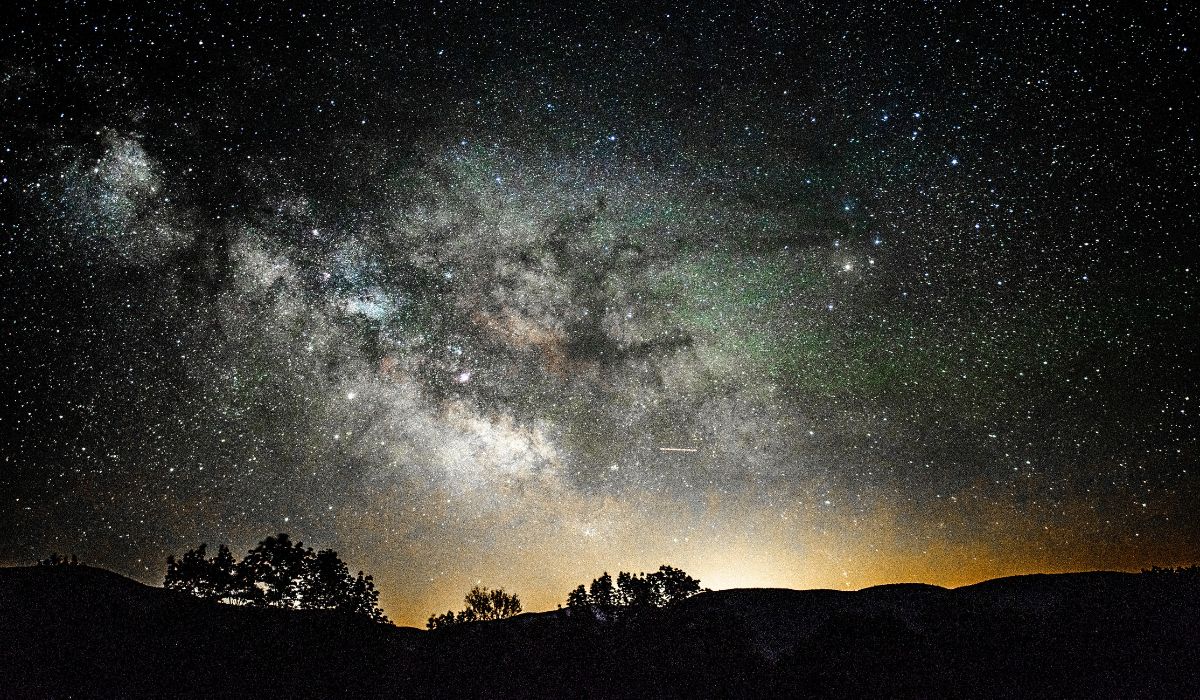
Who doesn’t like gazing into the dark of the night, lit up by billions of twinkling stars, galaxies, and all that’s unknown to humanity? But if you live in a city, chances are that you rarely come by such an opportunity. This is mainly because of the different types of pollution that cities in India are plagued with. If you’re an astrophile, whether seasoned or budding, we have a list of dark sky tourism spots in India where you can enjoy unobstructed views of the inky black void we call sky. But before that, let’s see what dark sky tourism or astrotourism really means.
What Is Dark Sky Tourism Or Astrotourism?
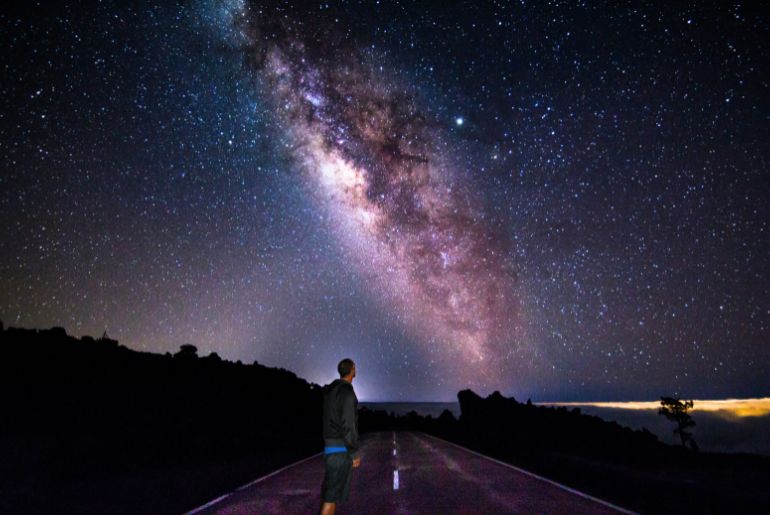
Dark sky tourism, or astrotourism, refers specifically to the travel that is motivated by unobstructed views of the night sky. There are many people in the world who love gazing at the stars at night. For several, like astrophysicists, cosmologists, astronomers, and even astrophotographers, gazing at stars is a professional necessity, rather than just a leisurely activity. Hence, knowing which sites in India are good for stargazing is very important. To that end, the Bortle Scale is very useful.
Also Read: Best Places For Stargazing In India This Winter
What Is The Bortle Scale?
The Bortle Scale is a tool of measurement for how dark the sky in a given region is. It has a total of nine numeric levels that rate and assess the darkness of the sky in a region, and how affected it is by light pollution. It also assesses the impact of said light pollution on the stargazing experience. Level 1 designates the darkest skies, perfect for watching stars with the naked eye. Level 9, on the other hand, denotes skies that are often found in inner cities. These are not fit for astrophotography or stargazing as they are gravely impacted by light pollution in the region.
Also Read: 12 Places To Go Stargazing In India! Get Starstruck!
Best Dark Sky Tourism Spots In India
1. Hanle Dark Sky Reserve, Ladakh
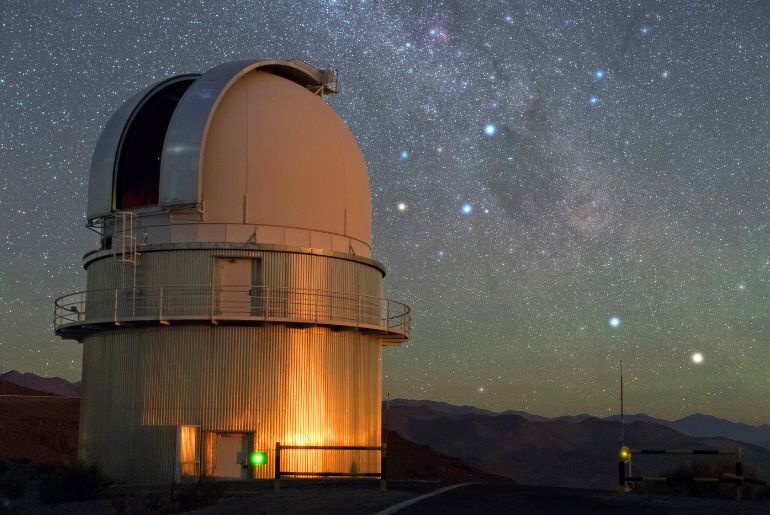
The only official Dark Sky Reserve in India, Hanle, is situated approximately 4,500 meters above sea level. It is home to the Indian Astronomical Observatory and the GROWTH-India Telescope (GIT). The views of the Milky Way and the Magellanic Clouds are transformative and absolutely unforgettable.
Best Time To Visit: May to September
Bortle Class: Level 1 to 2
Best For: Seeing the Milky Way and Deep Sky Objects
2. Spiti Valley, Himachal Pradesh
Perched at an altitude of 3,800 to 4,500 meters above sea level, the Spiti Valley offers some of the best and darkest skies in India. The cold air of the high altitude produces some of the most stable views of the sky. Head to the Komic Village, Langza, or Chandratal for the best views of the sky.
Best Time To Visit: June to September
Bortle Class: Level 2 to 3
Best For: Seeing star trails and planetary viewing
3. Thar Desert, Rajasthan
This is a beginner-friendly destination for stargazing owing to its exceptionally flat surface and lower altitude. The Sam Sand Dunes near Jaisalmer, Khimsar, and the Astroport Sariska near Alwar are some of the top stargazing destinations here.
Best Time To Visit: October to March
Bortle Class: Level 3 to 4
Best For: Seeing constellations and meteor showers
Also Read: 5 Best Camping & Stargazing Spots In October & November
4. Rann Of Kutch, Gujarat
Another iconic stargazing destination in India, the Rann of Kutch offers a unique view. The white sand perfectly amplifies the starlight, creating a mesmerizing double-sky effect that makes for an exceptional photo opportunity.
Best Time To Visit: October to February
Bortle Class: Level 3 to 4
Best For: Wide-field astrophotography
5. Chopta, Uttarakhand
Chopta is an unspoiled corridor between Auli and Kedarnath. There are no large hotels, scarce artificial lighting, and dense forests that block any peripheral glow. All this makes for an excellent place for stargazing. The Tungnath Temple there, the highest Shiva temple in the world, makes for the perfect addition to any picture of a starry sky.
Best Time To Visit: April to June
Bortle Class: Level 3 to 4
Best For: Seeing the Himalayan star trails
6. Coorg, Karnataka
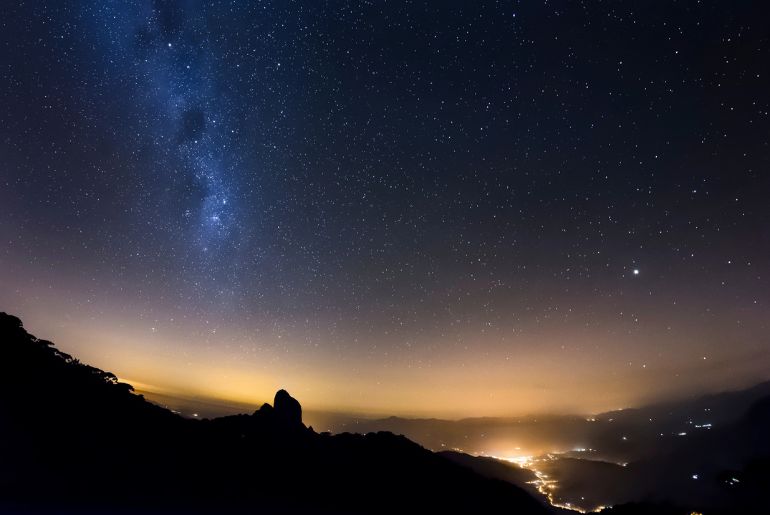
Coorg is the perfect place for stargazing in southern India. The Western Ghats act as natural barriers for any artificial light that may be coming from the Deccan Plateau, leaving the starry sky unobstructed and perfect for photography. The Brahmagiri Hills around the forests of Madikeri have great spots for stargazing, where you can spot the rare southern cross that’s invisible from most of northern India.
Best Time To Visit: October to February
Bortle Class: Level 4 to 5
Best For: Beginner stargazing and seeing the rare Southern Cross.
Also Read: 5 Best Desert Camps And Stays For Stargazing In Kutch
Practical Tips For First-Time Astrotourists And Stargazers
- Track the phases of the moon for the best and darkest view of the skies. No-moon nights are typically the best for stargazing.
- Red-light torches are much better as they preserve the night vision more than white ones.
- Use a camera with manual mode and a wide-angle lens for astrophotography.
- A lot of these places are quite cold, so make sure you carry warm clothes.
- Take binoculars along for an elevated viewing experience. If you’re a serious viewer, however, carrying a personal telescope is a non-negotiable.
- Acclimatization is crucial for destinations like Hanle and Spiti.
- For excellent shots of the Milky Way, make sure you use the camera with ISO 1600–3200, aperture f/2.8 or wider, and a shutter speed of 15 to 25 seconds.
Summing Up
India’s diverse terrain offers many perfect destinations for those looking for their next astrotourism adventure. From the Dark Sky reserve at Hanle to the scenic terrain of Coorg, your perfect starry night destination is out there!