

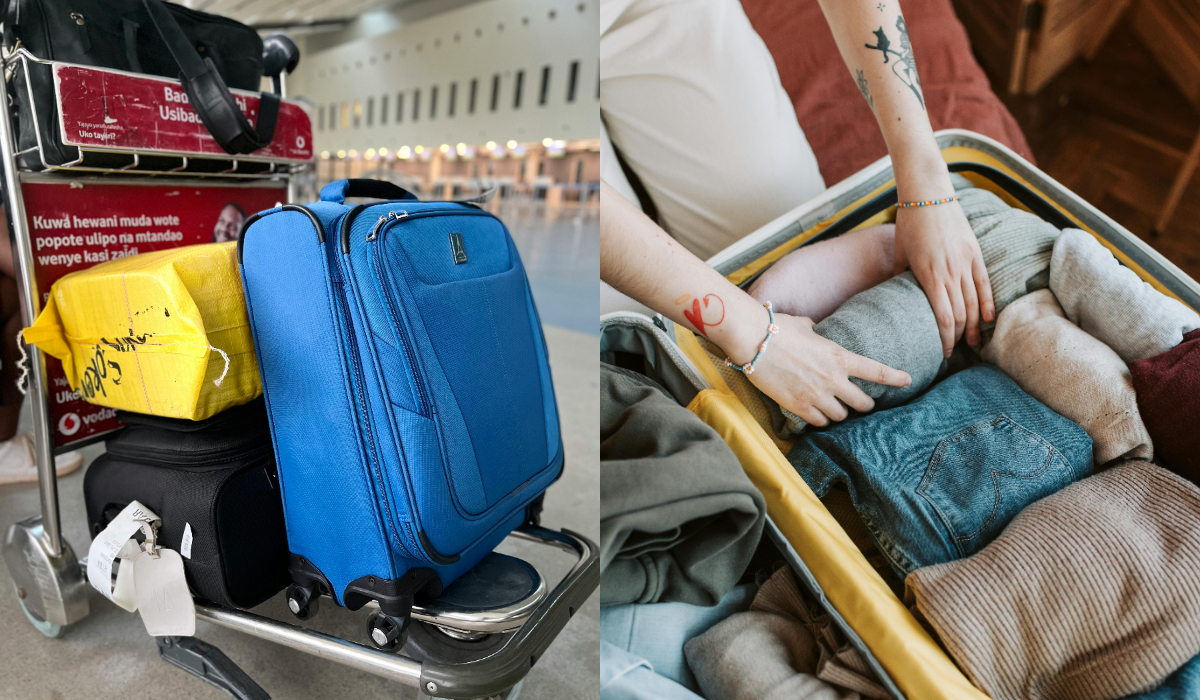
When booking a flight, especially as a first-timer, it can get confusing when deciding what to pack in your carry-on luggage and checked baggage. If you’ve ever found yourself stressed at the last minute, not knowing what goes into your carry-on versus checked baggage, you’re not alone. However, knowing what items are allowed and what items are prohibited in a flight can help you save you from awkward security checks and additional baggage fees. So in this guide, we’ll take you through what are the key differences between carry-on and checked baggage.
Carry-On vs Checked Baggage Guide
What Is Checked Baggage?
A checked bag or checked baggage is the luggage that you hand over to the airline before boarding. You cannot access this baggage during your flight – it sits in the airplane’s cargo load.
Checked baggage is commonly used for larger items and contains more luggage than a handbag or carry-on baggage. It is useful for long trips or for storing large items. Each airline has its own checked baggage allowance, and it may charge extra fees if your baggage exceeds the given weight limits. Additionally, weight allowance for checked baggage can also differ based on your route, baggage size, and ticket class.
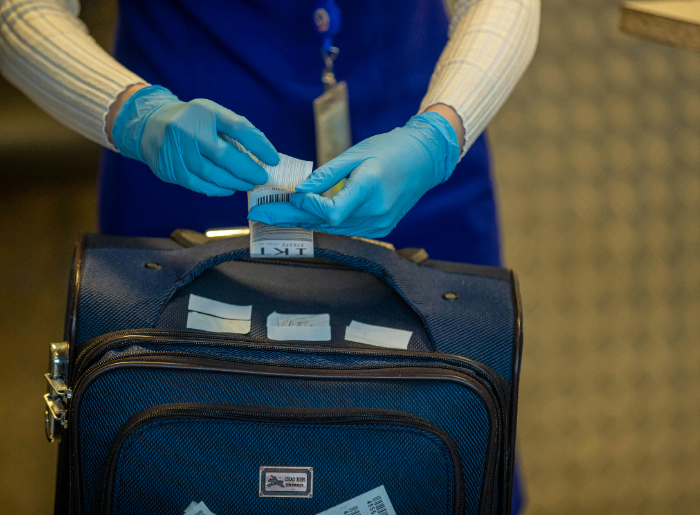
Most airlines allow checked baggage up to 158 cm in total linear dimensions (length + width + height). However, we advise you to always check with the airline you’re flying with to confirm baggage dimensions and other rules.
What Is A Carry-On Bag?
A carry-on bag is also known as hand luggage or cabin baggage. It is a piece of luggage that you are permitted to carry with you inside the aircraft. To store it inside the aircraft, there are special overhead compartments or sometimes, space under the seat. However, just like checked baggage, it must meet certain size and weight criteria to qualify as a ‘carry-on bag’.
Carry-on bags are ideal for short trips and business travel. Most airlines allow one standard-sized carry-on bag and one smaller personal item, with the latter being able to fit beneath the seat in front of you. Most airlines also limit carry-on bags within 7 kg and 10 kg.
Also Read: Google Launches ‘Find Hub’ To Track Lost Airport Baggage In Real Time
Key Differences Between Checked Baggage And Carry-On Bags
| Feature | Checked Baggage | Carry-On Bag |
| Size | Generally up to 158 cm in total linear length (check with respective airlines) | Generally up to 115 cm in total linear length (check with respective airlines) |
| Weight | Can vary depending on route, ticket class, and other factors | Generally up to 7 kg |
| Ease of travel | Heavier and harder to manoeuvre | Lighter and easier to manoeuvre |
| Safety | Prone to risk of getting damaged and/or lost during transit | Comparatively safe and secure, as it stays with the passenger |
| Ideal for | Short trips (1 to 5 days) | Longer trips (5+ days) |
| Restricted items | Power banks, lighters, lithium batteries, and alcohol over 70% alcohol by volume | Liquid containers more than 100 ml and sharp objects |
Prohibited Items In Flight India
While many airlines in India have their own baggage rules, there are a number of items that passengers are generally allowed to carry by these airlines. There’s also a list of prohibited items that most airlines generally do not allow on board.
Explosives And Sharp Objects
Fireworks, explosives, dynamites, grenades, and other similar items are completely prohibited, both in the checked and the carry-on baggage. Knives, scissors, box cutters, and other such sharp objects are allowed only in the checked baggage. They are prohibited in the carry-on baggage. In case you have any of these items, it is advisable to declare them to the staff at the checked baggage counter.
Chemicals And Corrosives
Chemicals such as bleach, insecticides, pesticides, acids, alkali, mercury, etc., are not allowed on the flight at all. Additionally, certain flammable substances such as camphor, turpentine, paint thinners, lighter fluid, etc., are also prohibited.
Liquids, such as gels, creams, and lotions, can be carried, given they do not exceed 100 ml. They must be carried in transparent containers in a plastic see-through bag or ziplock bag for easy identification.
Batteries, Electronics, And Power Banks
Lithium and spillable batteries are strictly prohibited in both checked and carry-on baggage. The same applies to e-cigarettes, vapes, and e-hookahs.
It is also advised to keep your electronic devices, including headphones and power banks, strictly in the carry-on baggage.
Food And Edibles
Note that most flights do not allow passengers to carry coconuts and chilli pickles for safety reasons. However, most food items, such as dried fruits, cakes, snacks, etc are allowed to be carried in carry-on or checked baggage. When carrying spillable or liquid items such as water, oils, honey, or food preparations involving curries and sauces, make sure that you seal them properly to avoid spillage.
Medication
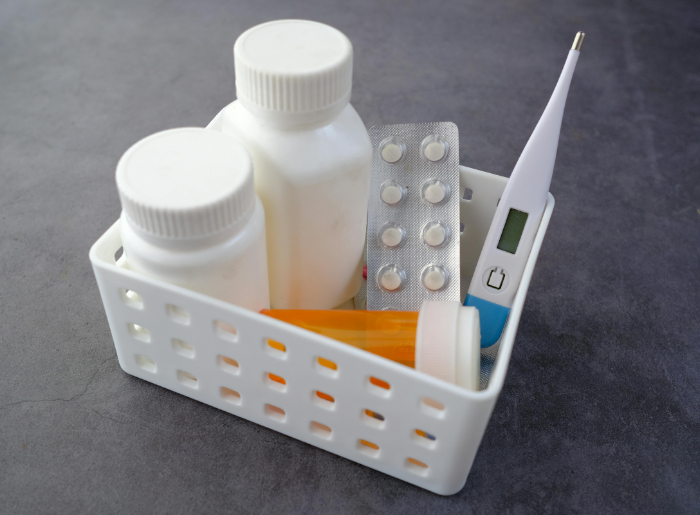
If you’re carrying your medication with you, ensure that it is properly stored and has a valid prescription. Carry it in your carry-on baggage. Certain medical items, such as diabetes-related syringes, oxygen cylinders for medical needs, and a few medicines, are allowed in both checked and carry-on luggage. However, thermometers are allowed only in the carry-on luggage and with a protective covering.
Also Read: Air India Integrates Apple AirTag With Baggage System For Seamless Tracking
Summing Up
In this blog, we’ve covered a list of things that are allowed and prohibited on a flight. From what is allowed in cabin baggage to what is prohibited, here’s a helpful guide to refer to if you’re packing for the first time. We’ve also helped you identify what goes in your carry-on vs checked baggage and listed key differences.
FAQs
Can I Carry Medications In My Carry-On?
Yes, you can carry medication with a valid prescription in both your carry-on and checked baggage. It is advised to carry them in your carry-on baggage in case you need immediate access.
Where Do I Pack My Phone Charger When Flying?
Standard phone chargers (adapter + cable) can be kept in checked baggage but it is advised to keep them in carry-on baggage for accessibility and safety. Power banks are to be strictly kept in carry-on baggage for safety reasons.
Should I Carry A Copy Of My Prescription?
Yes, you can carry a copy of your prescription if carrying medication. You can keep one copy at home in case yours get lost.