
If you’ve already explored where to experience Bohag Bihu and what makes it so special, the next question that needs to be addressed is what actually happens during those seven days?
As previously mentioned, Bohag Bihu is not just one celebration; it unfolds gradually, with each day carrying its own meaning, energy, and purpose.
This year, the Assamese New Year festival follows a structure known as Xaat Bihu, or “seven Bihus.” Instead of repeating the same rituals, each day shifts focus, moving from nature and agriculture to people, relationships, and community life.
Understanding this sequence is what truly brings this festival to life.
Why Bohag Bihu Is Celebrated Over 7 Days
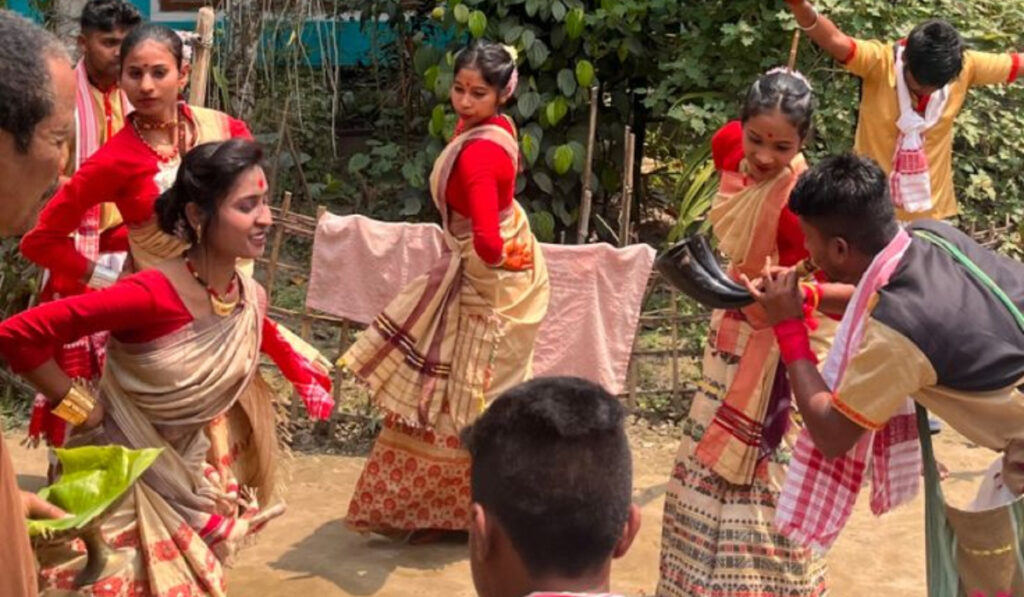
Bohag Bihu sets the rhythm; rather than fitting everything in a single day, they spread it across an entire week, allowing for an in-depth and personal experience spanning the different parts of life. Agriculture, spirituality, family, and culture are all given their own moment. It feels less like a single celebration and more like a transition into a new season.
1. Goru Bihu (April 14)
The festival begins by honoring cattle, which play a crucial role in agriculture. Farmers bathe, decorate, and feed them as a gesture of gratitude. It sets the tone for the festival by acknowledging what sustains daily life.
2. Manuh Bihu (April 15)
This day marks the Assamese New Year and shifts the focus to people. As a celebration of renewal, respect, and human connections. The entire family wears new clothes, seeks blessings from elders, and exchanges traditional gamochas.
3. Gosai Bihu (April 16)
Gosai Bihu is dedicated to prayer and spiritual grounding. Families visit temples or offer prayers at home, seeking prosperity and protection. It brings a moment of reflection within the celebrations.
4. Kutum Bihu (April 17)
Kutum Bihu is all about relationships and reconnecting with loved ones. People visit relatives and friends, share meals, and spend time together. It emphasizes the importance of community and belonging.
5. Mela Bihu (April 18)
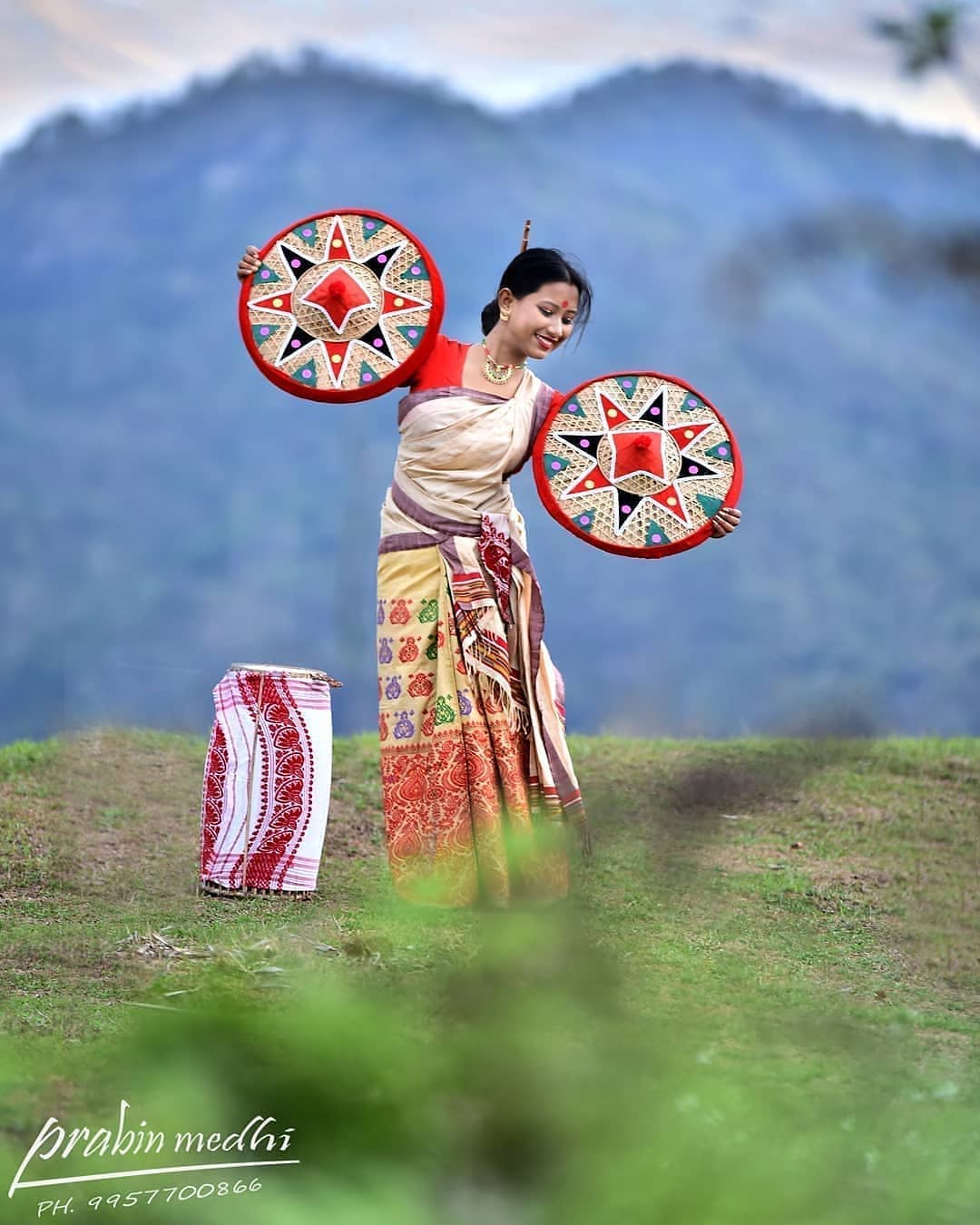
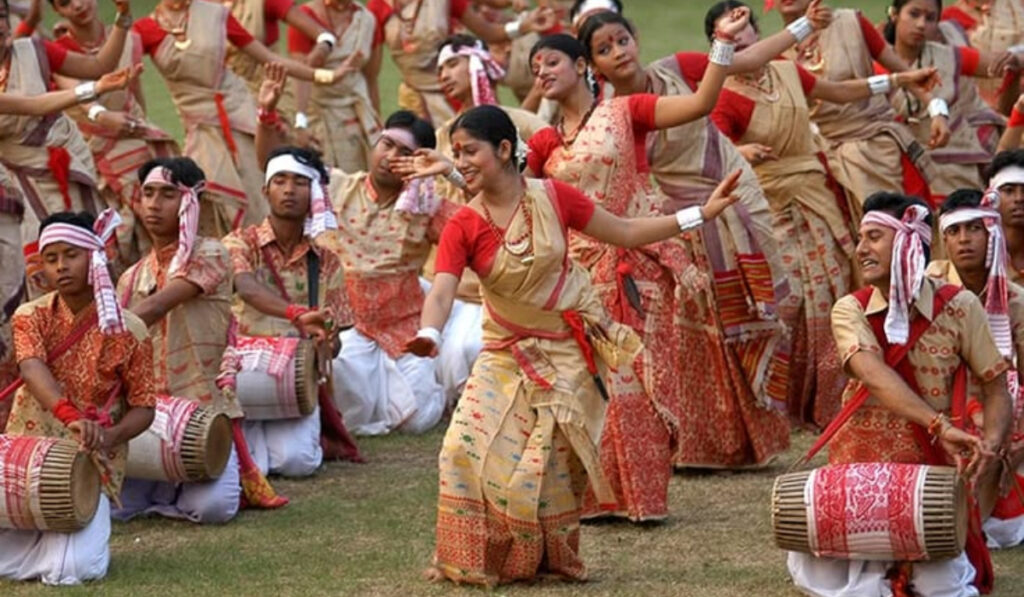
This day expands the celebration into public spaces and community gatherings. Fairs, performances, and Bihu dance events take place across towns and villages. The atmosphere becomes lively, colorful, and deeply collective.
6. Jiyori or Senehi Bihu (April 19)
This day focuses on affection and emotional connections. Married daughters often return to their parental homes, and families come together in a more personal way. It highlights the softer, more intimate side of the festival.
7. Sera Bihu (April 20)
The final day marks the gentle conclusion of the celebrations. Communities gather one last time before returning to their routines. It feels less like an ending and more like a calm transition back to everyday life.
Why This Structure Still Matters
What makes Bohag Bihu unique is not just what happens, but the order in which it happens.
- It begins with nature
- Moves to people and faith
- Shifts toward relationships and community
This sequence reflects a balanced way of living, one that values gratitude, connection, and renewal.
Summing Up
Bohag Bihu is not just one big celebration; it is something that builds slowly over time. Each day brings a different focus, whether it is nature, people, or relationships, and together, they create a rhythm that feels both intentional and effortless.
By the end of the week, it does not feel like the festival is ending. More than marking a new year, Bohag Bihu leaves you with a quiet sense of renewal, like you are stepping into the next chapter with a little more meaning.