
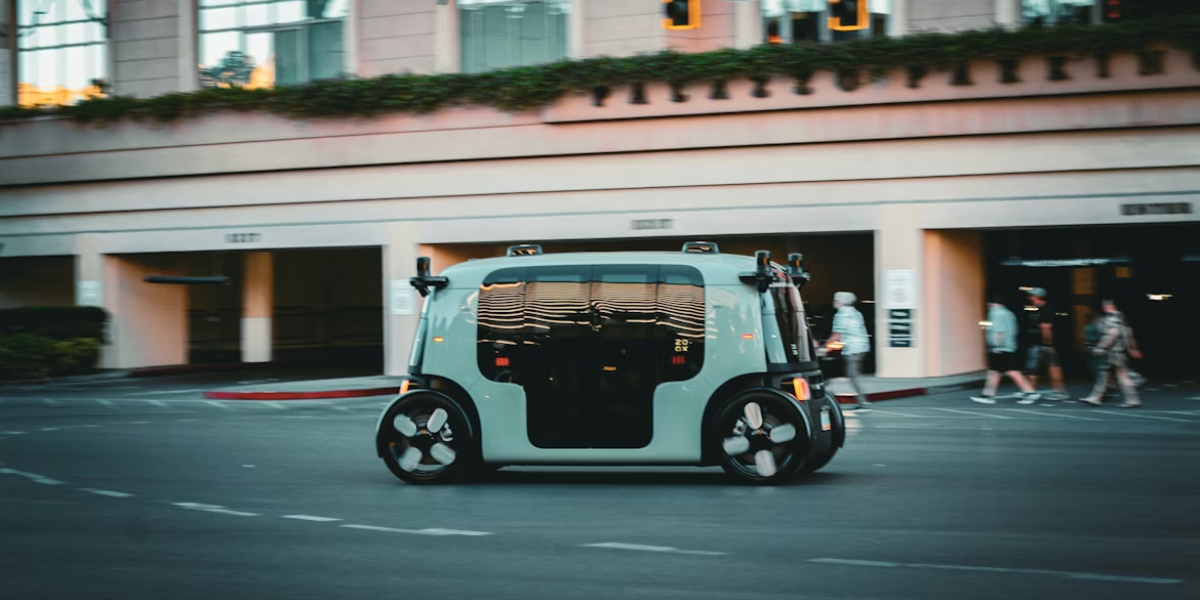
Mumbai is set to take a futuristic leap in urban mobility as Maharashtra Chief Minister Devendra Fadnavis recently performed the groundbreaking ceremony for the city’s first driverless pod taxi project. Designed as an Automated Rapid Transit System, the project aims to bridge the long-standing last-mile connectivity gap between Kurla and Bandra Kurla Complex (BKC), two of the city’s busiest transit and business hubs.
Driverless Pod Taxi Project To Begin Soon
Driverless Pod Taxi Routes And Other Information
The proposed corridor, spanning 8.85 kilometres, will be developed in phases, with the first phase covering a 3.36-kilometre stretch between Bandra and Kurla. Once completed, the route will feature 22 air-conditioned stations placed at short intervals, allowing commuters to access the service conveniently across key points. The alignment will pass through important junctions such as LBS Marg and Kalanagar, ensuring seamless connectivity between suburban railway stations and commercial districts.
What sets this system apart is its fully automated, driverless technology. The pods, powered by battery-operated systems, will run on dedicated elevated tracks and are designed to carry up to six passengers each. With a top speed of 40 kmph and minimal waiting time between pods, the system promises quicker and more efficient movement across short distances. Unlike conventional transport, these pods will operate on a demand-based model, stopping only at stations selected by passengers, reducing unnecessary halts and saving time.
Another key aspect is its integration with existing infrastructure. The pod taxi system will connect with major metro lines, including those passing through BKC and nearby corridors, allowing commuters to switch between different modes of transport without hassle. A dedicated depot is also planned in Bandra East to support operations and maintenance.
Importantly, the project will be implemented by MMRDA on a public-private partnership model, ensuring that it does not place a financial burden on the state while still generating revenue.
Summing Up
The project is being positioned as a sustainable solution to Mumbai’s growing traffic concerns. By offering a clean, electric mode of transport, it is expected to ease congestion in high-density areas like BKC, which often struggle with heavy vehicular movement during peak hours. Officials estimate that the system could cater to over one lakh passengers by 2031, making it a significant addition to the city’s transport network.