
On March 28, 2026, Prime Minister Narendra Modi will be visiting Uttar Pradesh. PM Modi is scheduled to tour the Terminal Building at the Noida International Airport in Jewar, Gautam Buddha Nagar. Following this, at about 12 PM, PM Modi will officially open Phase 1 of the Noida International Airport.
The launch of Noida International Airport marks a crucial advancement in India’s efforts to establish itself as a global aviation hub. Designed to serve as a key international entry point for the National Capital Region (NCR), this new airport plays a vital role in enhancing both national and international air travel connectivity.
It serves as the second international airport in the Delhi NCR area, aiming to complement the existing Indira Gandhi International Airport.
Noida International Airport Is Made With A Budget Of INR 11,200 Crore
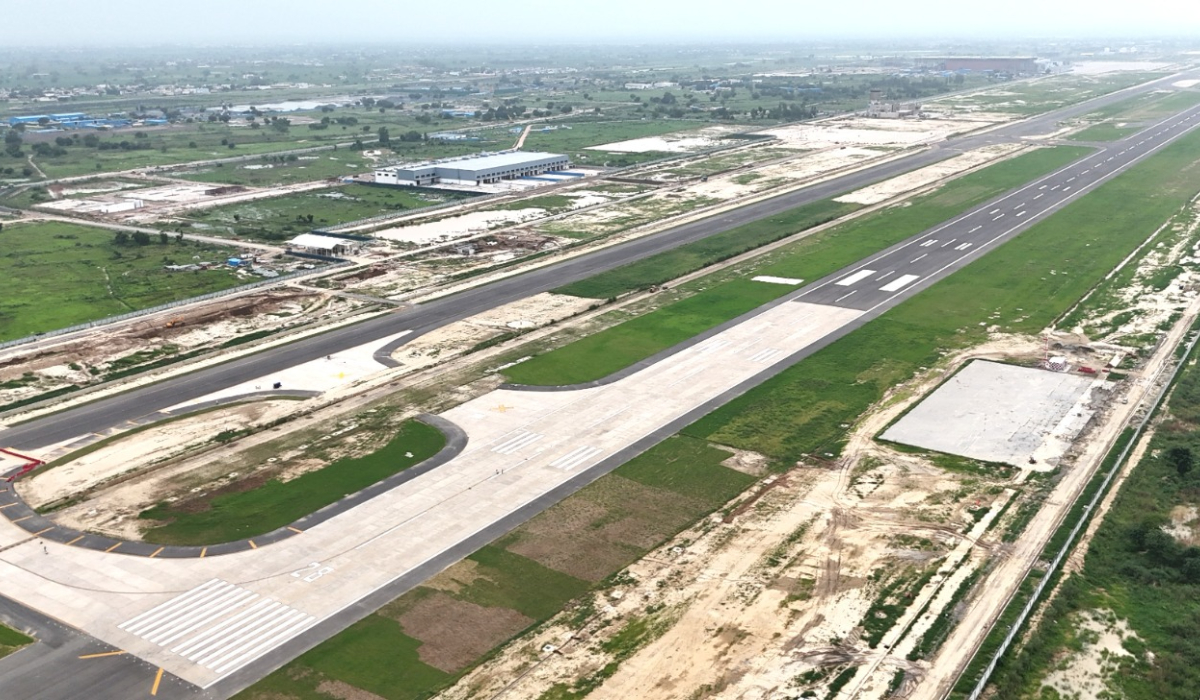
As one of India’s largest greenfield airport undertakings, Phase 1 of the Noida International Airport has been developed with an investment of approximately INR 11,200 crore under a Public-Private Partnership (PPP) paradigm. This phase is set to accommodate 12 million passengers annually, with potential expansion to 70 million passengers in the future. The airport features a 3,900-meter runway designed to facilitate wide-body aircraft, equipped with modern navigation technologies such as Instrument Landing System (ILS) and sophisticated airfield lighting to ensure reliable, all-weather operations.

Furthermore, the airport is set to house a robust cargo ecosystem, which includes a Multi-Modal Cargo Hub with an Integrated Cargo Terminal, capable of processing over 250,000 metric tonnes annually, expandable to around 1.8 million metric tonnes. A dedicated 40-acre Maintenance, Repair, and Overhaul (MRO) facility is also part of the infrastructure.
Emphasizing sustainability, the Noida International Airport aims for net-zero emissions through energy-efficient systems and eco-friendly practices.
The design reflects Indian cultural heritage, incorporating elements inspired by traditional ghats and havelis, merging cultural significance with modern infrastructure.
Strategically located along the Yamuna Expressway, this airport will serve as a multi-modal transport hub, ensuring seamless connectivity via road, rail, metro, and regional transit systems for both passengers and cargo.