

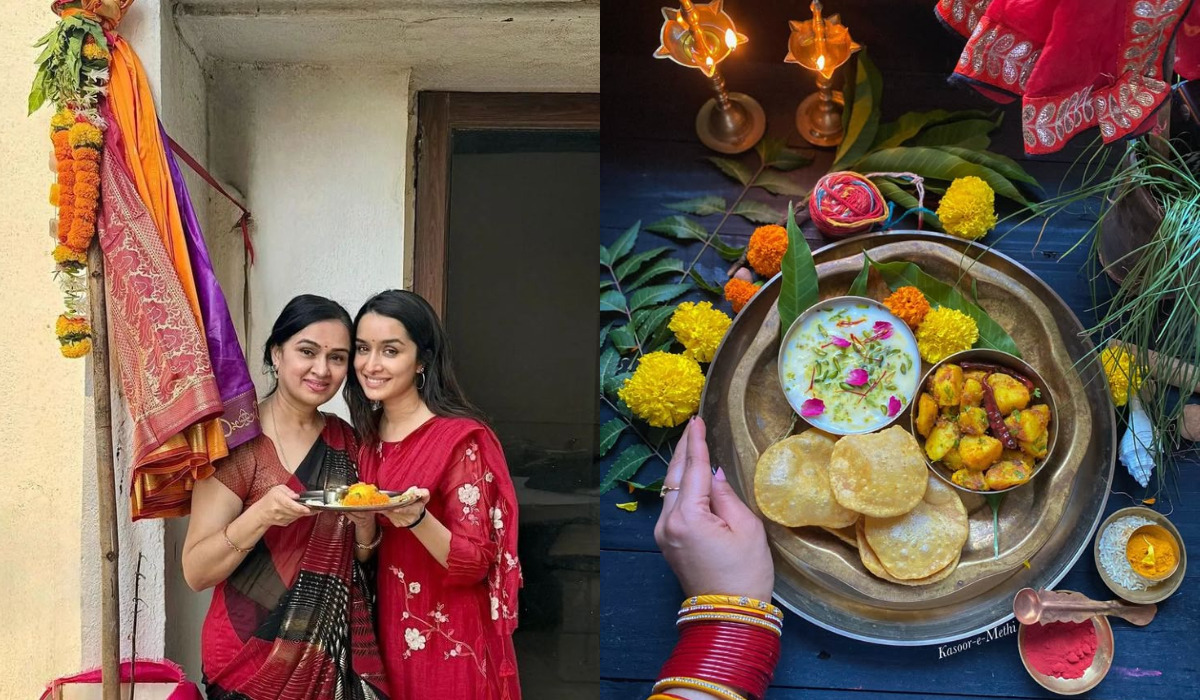
Gudi Padwa, one of the most significant festivals in India, is all set to take place on March 19, 2026. Celebrated in Maharashtra and Goa primarily, the festival is celebrated both within households and as grand street celebrations. However, you don’t always need a vibrant street celebration to soak in the magic. Gudi Padwa at home has its own kind of charm – one that is equal parts tradition, homely rituals, and heartwarming chaos. So here’s a brief guide on how you can celebrate Gudi Padwa at home!
Celebrating Gudi Padwa: How To Celebrate Gudi Padwa At Home
Origins Of Gudi Padwa
The festival is typically celebrated in Maharashtra and Goa, being considered the ‘Marathi New Year’. In fact, the word ‘Padwa’ comes from the Sanskrit word ‘Pratipada’, which means the ‘first day’ of the lunar fortnight. As it falls on Chaitra Shukla Pratipada, it is considered to be the beginning of spring and the new year.
There are many stories rooted in Indian mythology as well as daily life back in ancient times that indicate the origins of this festival. One legend says that the masses began erecting the ‘gudi’ to welcome Lord Rama, Sita, and Laxman from 14 years of exile. Some other accounts say that the festival was started by farmers to mark the beginning of the harvest season.
Gudi Padwa 2026 Dates And Muhurat
Gudi Padwa will be celebrated on Thursday, March 19, 2026. It falls on Chaitra Shukla Pratipada, the first day of the Hindu lunar calendar year.

Here are the muhurat / tithi (auspicious time) timings:
- Tithi begins: 6:52 AM, March 19, 2026
- Tithi ends: 4:52 AM, March 20, 2026
Gudi Padwa is considered to be one of the 3.5 muhurats considered to be extremely auspicious as per Marathi traditions. While the muhurat lasts for almost an entire day, many consider it auspicious to erect the gudi in the morning itself.
Also Read: From Breezy Co-ords To Long Jackets: Steal Rashmika Mandanna’s Travel Lookbook
How To Celebrate Gudi Padwa At Home?
Clean And Decorate Your Home
Purity and cleanliness are essential to Hindu rituals and are believed to ward off negative energies. In the days leading up to the festival, families sweep and mop floors, clean the corners of their homes, discard old and broken items, and clean their houses. Sprinkle gangajal or holy water in all corners of their homes, as it is considered to be a symbol of purity.
Once your house is clean, decorate your house with flowers. Like most other Hindu festivals, families create vibrant rangoli designs outside their doors using rangoli powder and flower petals. Then hang fresh mango leaves and marigold garlands around your house. It is considered auspicious to hang a string of mango leaves (toran) on the frame of your door. Then decorate the house with oil lamps, flower petals, and incense sticks to create a serene spiritual ambiance.
Wake Up Early, Bathe, And Wear Traditional Attire
On the day of the festival, it is considered auspicious to wake up early in the morning, preferably before sunrise. Bathe and wear traditional attire to celebrate the festival. Many families wear traditional attire, including sarees, kurtas, salwar-kameez, etc, and accessorize their outfits with traditional gold jewelry, floral accessories like gajra, bindi, and other accessories.
Erecting The Gudi
This is the most significant ritual of Gudi Padwa. Families erect the gudi, considered to be a symbol of victory, divine blessings, prosperity, and good fortune.
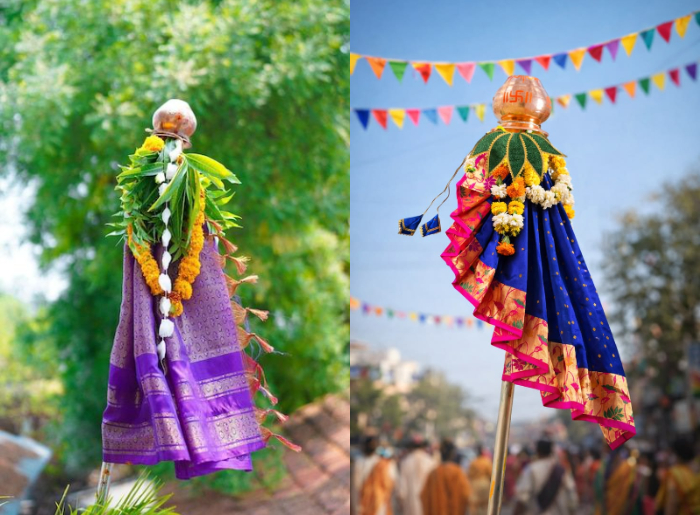
To erect a gudi, take a clean, long bamboo stick. The stick represents prosperity and good fortune.
Then a new, unused saree or cloth is draped and tied to one end of the stick.
As mango leaves are considered sacred, they are tied on top of the saree/cloth along with neem leaves, garlands made of hardened sugar (gaathi), and marigold flowers.
Then, a kalash – a pot made of copper or silver – is inverted and placed on top of the stick. The entire structure is called the ‘gudi’.
In the end, the gudi is fastened and erected at the entrance or a window, preferably facing east. This practice is rooted in ancient Hindu traditions and is symbolic of victory, growth, positivity, and success. Once the gudi is erected, one should place a diya below it, light incense sticks, and offer prayers.
Also Read: What To Gift For Eid 2026: 15 Thoughtful Eid Gift Ideas For Family & Friends
Spiritual Benefits Of Erecting The Gudi
- Brings prosperity: The gudi is symbolic of victory and prosperity. As the festival marks the beginning of the new year, it is considered auspicious to erect the gudi.
- Wards Off Negative Energy: The festival of Gudi Padwa is believed to ward off negative energy. The elements in the gudi – mango leaves, neem leaves, etc., are believed to be symbols of purity and positivity.
- Encourages Devotion: Gudi Padwa, rooted in the philosophy of the triumph of good over evil, encourages individuals to engage in spiritual practices.
Festive Food Made During Gudi Padwa
While rituals are crucial to the festival, the food made on this day holds just as much importance! Here are some of the delicious delicacies made on the day of Gudi Padwa:
- Puranpoli: A puranpoli is a traditional flatbread made in Maharashtra, Goa, and parts of Gujarat. It is made using wheat flour and is stuffed with a mixture of chana dal, cardamom powder, and jaggery and served with a generous amount of ghee, milk, and a spicy gravy called ‘katachi amti’.
- Shrikhand Puri: A puri is essentially fried bread made of wheat flour. It is served with a creamy shrikhand, made of strained yogurt, sugar, saffron, and nuts.
- Kesar Bhat: Translating to ‘saffron rice’, this delicacy is quite easy to make yet fulfilling. It is a sweet dish made of rice infused with ghee, saffron, and dried nuts. Kesar Bhat is made on a number of auspicious occasions, including weddings and festivals.
Summing Up
Gudi Padwa celebration at home is all about finding meaning in the simplest gestures and celebrating the day with your loved ones. The traditions around this festival are rooted in the physical and spiritual cleansing, not only of the house but also of the body and the mind. The festival’s philosophy encourages us to embrace new beginnings and spread the message of love and kindness.