

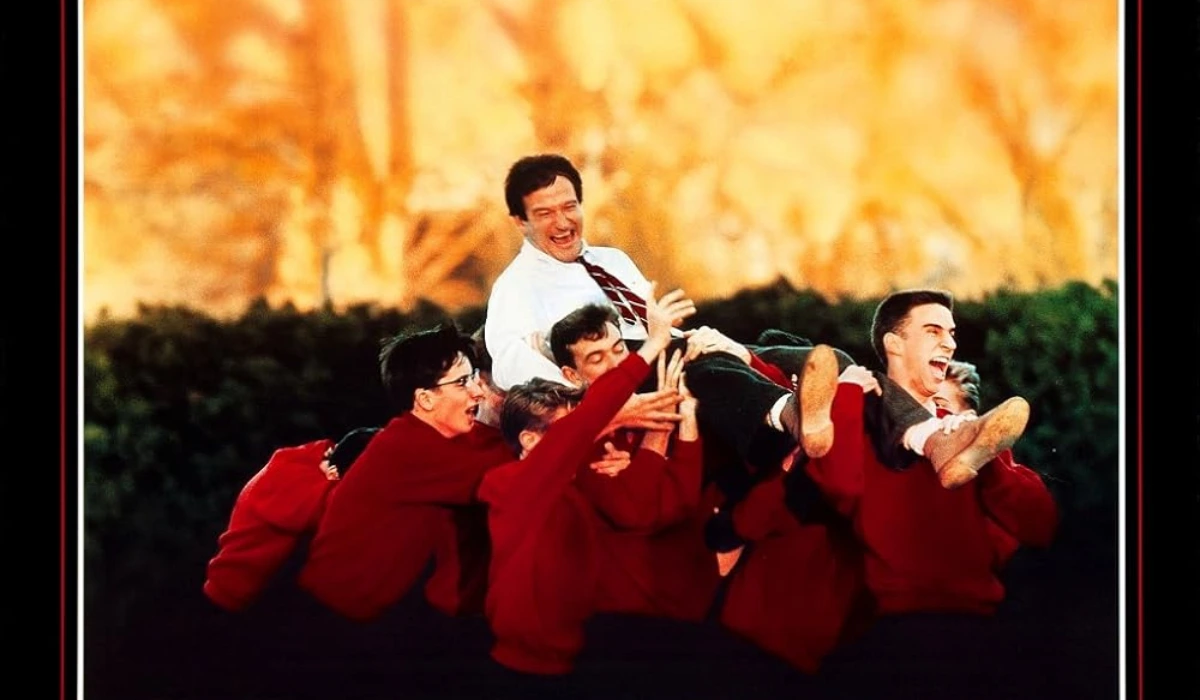
Released in 1989, Dead Poets Society might appear, at first glance, like a product of another era – boarded classrooms, strict uniforms, and a world without smartphones or social media. Yet, more than three decades later, the film feels uncannily current. In fact, its relevance has only intensified.
At its core, Dead Poets Society is not just a story about poetry or a charismatic teacher. It is a meditation on conformity, pressure, identity, and the courage required to live authentically. In an age marked by academic competition, career anxiety, algorithm-driven thinking, and shrinking space for creativity, the film’s message feels less nostalgic and more like a warning – and a call to action.
1. The Tyranny of Conformity in a Hyper-Competitive World
The Welton Academy motto – Tradition, Honor, Discipline, Excellence – mirrors the values still prized in many education systems today. Students are pushed toward predefined markers of success: grades, rankings, prestigious colleges, and “safe” careers.
What has changed is the scale of pressure. Today’s students face:
- Relentless comparisons on social media
- Parental expectations amplified by economic uncertainty
- A fear of falling behind in an increasingly competitive world
Neil Perry’s struggle remains painfully familiar. His tragedy is not rooted in rebellion, but in the absence of choice. Even now, many young people are encouraged to excel – but only within narrow boundaries defined by others.
The film asks a question that still unsettles us:
What happens when excellence is pursued at the cost of individuality?
2. “Carpe Diem” in the Age of Burnout
John Keating’s iconic exhortation – Carpe Diem. Seize the day. – is often misunderstood as reckless romanticism. In reality, it is a plea for awareness: a reminder that life is finite and should not be lived on autopilot.
Today, burnout has become a global phenomenon. People are constantly “busy,” yet deeply disconnected – from joy, from purpose, and often from themselves. Hustle culture glorifies exhaustion, while reflection is dismissed as unproductive.
Keating’s teaching philosophy directly challenges this mindset. He urges students to:
- Think independently
- Question inherited beliefs
- Find their own voice
In a world that rewards speed over depth and output over meaning, Carpe Diem is no longer inspirational fluff – it is an act of resistance.
3. The Shrinking Space for Art, Humanities, and Critical Thought
One of the film’s most radical ideas is that poetry – and by extension, art – matters. Not because it is useful in a transactional sense, but because it helps us understand what it means to be human.
In recent years:
- Arts and humanities are increasingly sidelined in favor of “job-ready” skills
- Education is measured by employability rather than enlightenment
- Creativity is monetized, quantified, and optimized
Keating’s famous speech about poetry – “We read and write poetry because we are members of the human race” – feels especially urgent now. At a time when AI can generate content and algorithms shape taste, the film reminds us that human expression is not about efficiency, but about meaning, love, and mortality.
4. Authority, Obedience, and the Cost of Silence
Dead Poets Society does not present authority as inherently evil, but it does expose the danger of unquestioned obedience. The tragedy unfolds not because people are cruel, but because they choose compliance over compassion.
This theme resonates powerfully today:
- In workplaces where speaking up can cost careers
- In institutions that prioritize reputation over responsibility
- In societies where dissent is often labeled as disruption
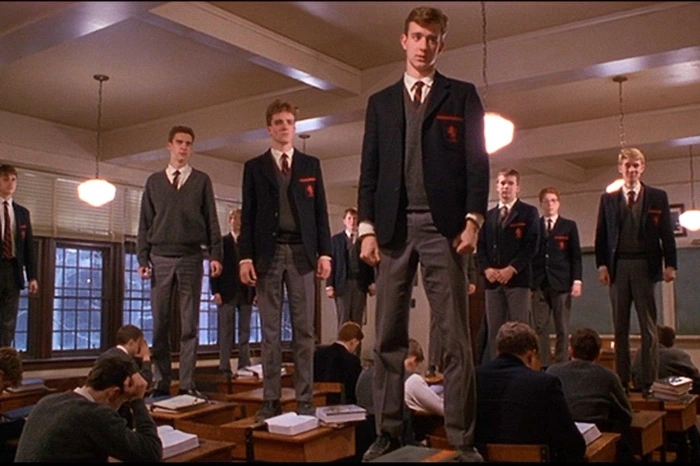
The students’ final act – standing on their desks to say “O Captain! My Captain!” – is not a victory, but a moment of awakening. It symbolizes the realization that silence, too, is a choice – and often the most damaging one.
5. Mental Health, Masculinity, and Emotional Suppression
Long before mental health entered mainstream conversation, Dead Poets Society depicted the consequences of emotional repression – particularly among young men.
Neil’s inability to express fear, vulnerability, or dissent reflects a broader cultural problem that persists today:
- Success is prioritized over emotional well-being
- Vulnerability is mistaken for weakness
- Seeking help is delayed until it is too late
In this sense, the film is not just relevant – it is prophetic. It highlights how systems that ignore emotional realities can produce outward achievement while quietly eroding inner lives.
Conclusion: Why Dead Poets Society Still Matters
Dead Poets Society endures because it does not offer easy answers. It does not promise that following your passion will be painless or that defiance guarantees happiness. Instead, it asks something far more difficult:
Are you living a life chosen by you, or one chosen for you?
In an era defined by pressure, performance, and perpetual comparison, the film reminds us that thinking differently is not a luxury – it is a necessity. Its relevance today lies not in nostalgia, but in its refusal to let us forget that education should awaken minds, not just train them, and that life, however structured it may become, still demands courage.
To watch Dead Poets Society now is not merely to revisit a classic.
It is to confront a question we keep postponing –
and one day, may not have the time to answer.