

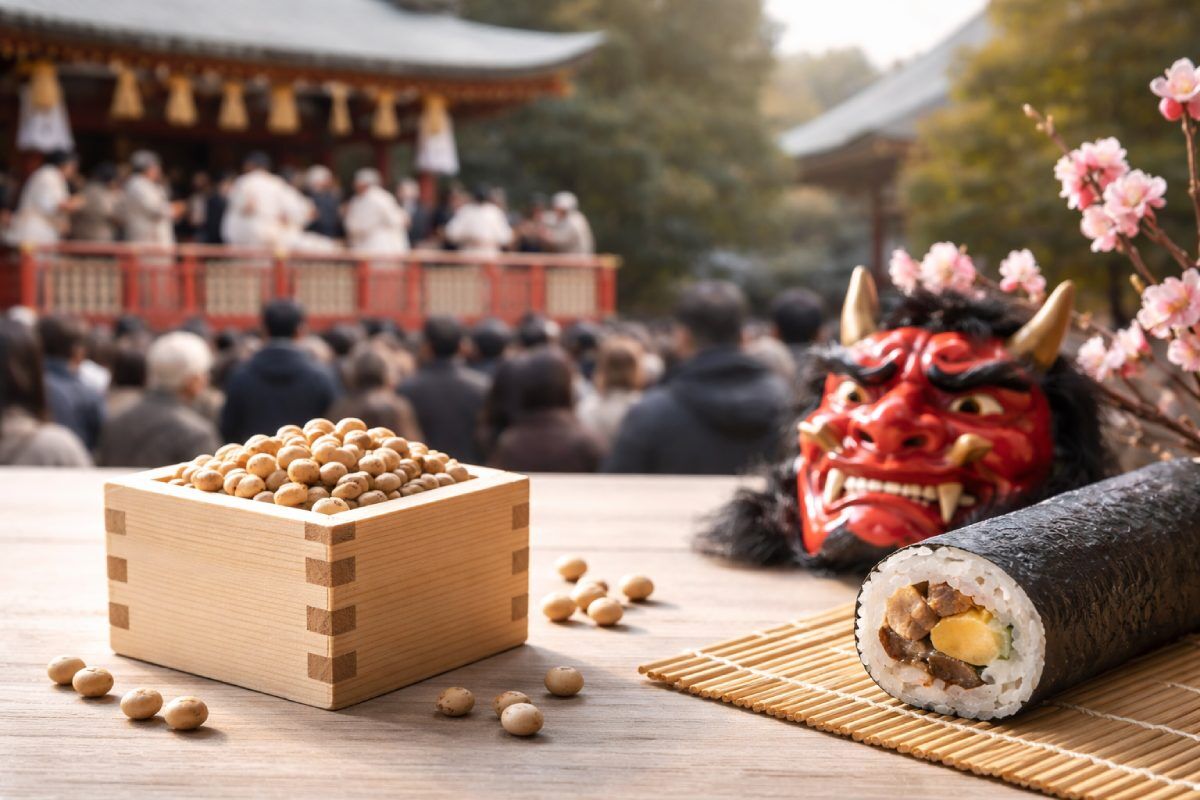
Festivals in Japan are lively community celebrations that are connected to historical events, changing seasons, and local shrines. These festivals typically feature seasonal foods, traditional dances, elaborate floats, music, unique rituals, fireworks, and more. Each festival provides a glimpse into the country’s rich traditions, ranging from serene rituals to vibrant street parties.
One such festival is the well-known Setsubun Festival, which will take place on February 3, 2026. This festival marks the transition between seasons, occurring just one day before the arrival of spring. Here’s everything you need to know about this Japanese celebration, from its significance to its various customs.
All About The Upcoming Setsubun Festival in Japan
What Is Setsubun?
The Japanese festival Setsubun marks the day before the beginning of spring according to the traditional lunar calendar. The name translates to “division of seasons,” signifying the end of winter and the arrival of spring in Japan.
Every year, this festival is celebrated either on February 2 or February 3, depending on the old Lunar calendar. And in 2026, this festival will be celebrated on February 3.
The festival is also known as the Bean-Throwing Festival (Mame-maki) or the Spring Festival (Haru Matsuri). It is not the official Lunar New Year of Japan, but it is considered to be similar.
How Is Setsubun Celebrated?
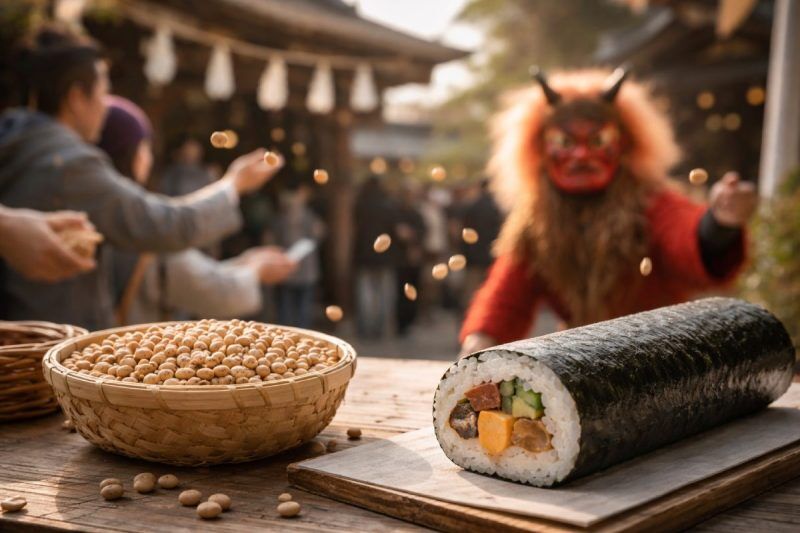
The festival is marked by the main ritual known as “Mame-Maki”. This is a Japanese ritual in which they throw roasted soybeans to welcome good fortune and drive away all the evil spirits.
These soybeans are thrown out from the main door or at someone who is dressed as an Oni (demon). While throwing these soybeans, the person throwing them shouts, “Oni wa soto, fuku wa uchi!” This simply translates to “Devils out, fortune in.”
After throwing the soybeans, they tend to eat some of the soybeans left according to their age. One for each year of their age and one extra for the upcoming year. This ritual is said to ensure good health and happiness. Many people visit shrines to perform this ritual.
Another ritual associated with the Setsubun festival is known as “Ehomaki.” Ehomaki is actually the name of a unique sushi roll that is prepared and consumed only on Setsubun. This sushi roll is comparatively bigger and longer than the normal sushi rolls found in Japanese restaurants.
It is prepared by using seven ingredients, as it is considered to be a lucky number in Japan. Every year, a direction is announced, which is known as the good direction, facing which you must consume the sushi roll for good fortune.
This year’s direction is south – south-west. You also have to make a wish while consuming it. It is believed that you must consume the whole roll in one go, without stopping.
What Is The History Of Setsuban?
Setsubun originated in ancient China, where it was known as “tsuina,” and was introduced to Japan in the 8th century during the Nara period (710-794).
During the Heian period (794-1185), Japanese nobles performed rituals associated with this festival to ward off illness and bad luck. It was believed that as the seasons changed, the likelihood of bad luck and illness increased, making these rituals necessary.
In the Muromachi era (1336-1573), the practice of bean-throwing, or mamemaki, became popular among both samurai and common folk.
A legend from Kyoto’s Mt. Kurama tells the story of a monk who defeated an ogre or demon by throwing roasted soybeans into its eyes. This tradition spread nationwide during the Edo period (1603-1867) and evolved into a fun family event.
You May Like Also: UPI Goes Global: Indian Tourists Can Soon Make Payments In Japan via UPI
Summing Up
Setsubun in Japan is a festival in which people ward off evil spirits and welcome good fortune with the shift of seasons. They perform rituals like Mame-Maki, Ehomaki, and also visit shrines.
FAQS
What Is Setsubun In Japan?
Setsubun is a bean-throwing traditional festival in Japan.
When Is Setsubun?
Setsubun falls right on a day before spring, generally falling on February 2 or 3.
Which Are The Japanese Festivals In February?
Setsubun, a unique bird-feeding ritual in Kyoto at Bokenji Temple, and early cherry blossom previews in some regions.
What Is Setsubun, And How Is It Celebrated?
Setsubun is a bean-throwing traditional festival in Japan. It is celebrated with people throwing soybeans at the Oni or the demon and eating long sushi rolls.
Why Do You Throw Beans At Oni?
According to a popular folklore in Japan, throwing beans helps in warding off evil.
What Is February 2 In Japan?
February 2 or 3 is generally the day when Setsubun is celebrated in Japan.