
Each different community in India has its own, unique way of celebrating the harvest. From Pongal in the South to the Lohri in the North, India has a treasure trove of harvest festivals deeply rooted in traditions. One such festival, celebrated predominantly in Assam, is the festival of Bhogali Bihu or Magh Bihu.
Falling on 15th January, 2026, it marks the end of the Pausha or Pooh month and the beginning of the Magh month, usually in mid-January.
Let’s take a deep dive into how this festival is celebrated, what are the traditions involved, and what is its significance.
Bhogali Bihu 2026: Significance, Rituals, And More
Significance Of Bhogali Bihu
Magh Bihu or Bhogali Bihu is a festival celebrated in Assam and is deeply rooted in the state’s culture. The festival symbolizes a deep-seated interconnectedness between the local communities, nature, and culture.
Magh or Bhogali Bihu is a celebration of nature and is an occasion for the local communities to enjoy food, share gifts, and express their gratitude towards nature.
The spirit of togetherness and shared identity is manifested through the number of delicacies, rituals, and traditions that have been passed down from generation to generation.
Three Crucial ‘Bihus’ In Assam
The Bihu is not just one festival; it has three forms, each coinciding with crucial events in the agricultural calendar of the region.
Bohag Bihu, Kati Bihu, and Magh Bihu are the three forms of Bihu celebrated in Assam. Magh Bihu is celebrated in mid-January, Bohag Bihu is celebrated in mid-April, and Kati Bihu is celebrated in October.
Magh or Bhogali Bihu festival is celebrated on the brink of Magh as Pausha ends and Magh begins. Also known as the day of Makar Sankranti in some other parts of India, the day is considered auspicious in Hindu culture.
It is believed that on this day, the sun begins its northward journey or ‘Uttarayan’ and transitions into the Hindu zodiac sign of ‘Makara’.
Rituals And Practices Involved In Bhogali Bihu
Building The Meji And Bhelaghor
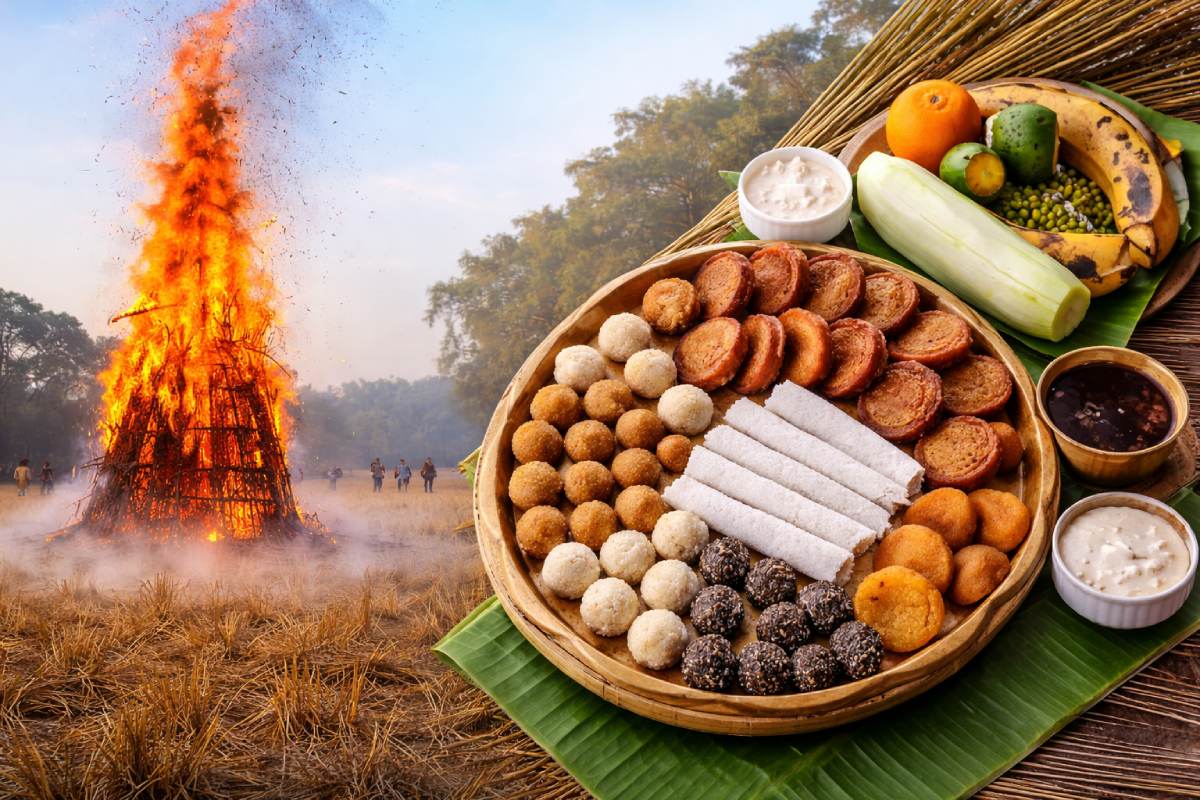
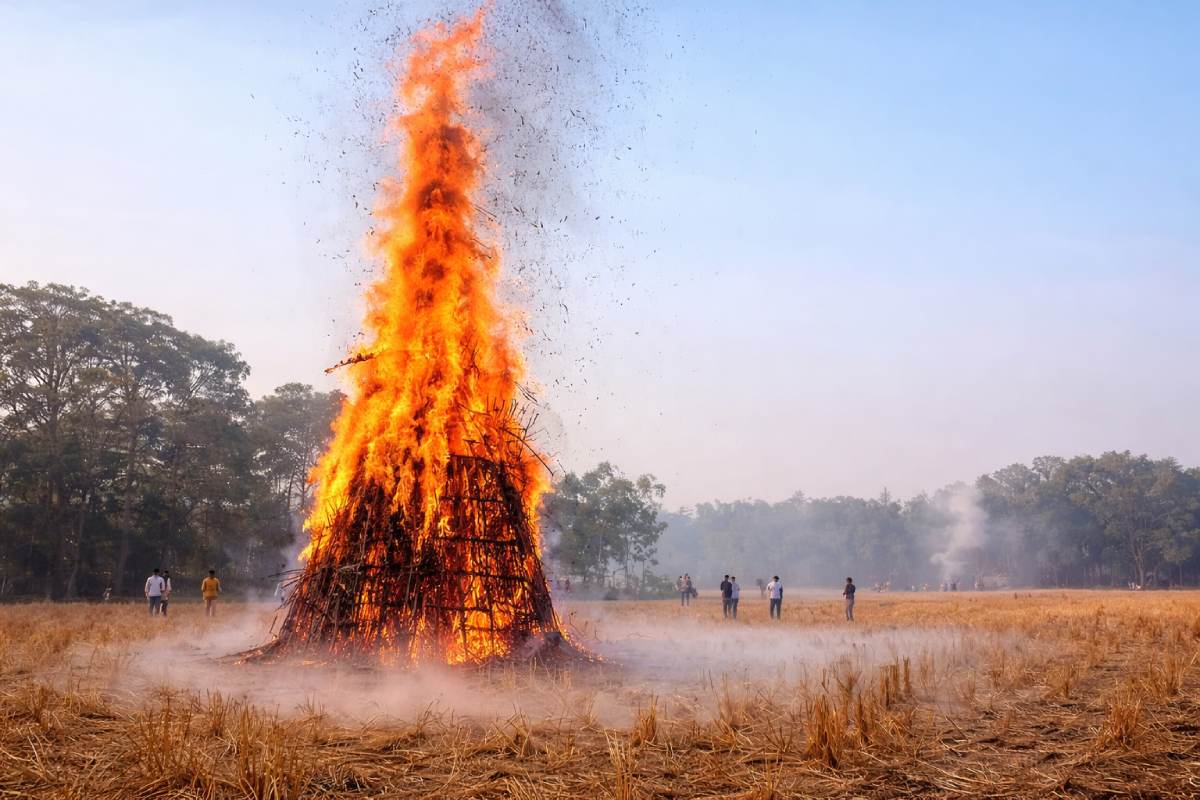
Bhogali Bihu festival celebrations begin on the day before the actual Bihu, called ‘Uruka’. On this day, people of the village build temporary structures of bamboo, wood, and hay called ‘Bhelaghor’. Another structure of bamboo, grass, and dry banana leaves is made, called ‘Meji’.
Mejis are usually built on the grounds of a community prayer house or the courtyard of a chosen household. These structures symbolize community bonding as the entire village comes together to build them.
Villagers also engage in fishing, and the fresh catch obtained through the fishing is used to make delicacies on the day of the Uruka. Villagers share meals and indulge in the festive spirit in Bhelaghors.
On the next day, people come together early in the morning to burn Mejis. As the Meji burns, people offer rice, pulses, ghee, and snacks into the fire as offerings. The burning of the Meji represents the triumph of light over darkness and life over death.
Ancestor Worship And Exciting Games
Certain communities in Assam also associate the burning of the Meji with ancestor worship and link it to the funeral pyre of Bhisma from the Indian epic Mahabharata.
Legends say that he was blessed with the boon of a wilful death and decided to abandon his mortal body only after the sun transitioned into Uttarayan.
On the day of the Bhogali Bihu, villagers also engage in many exciting communal activities and games. They play games such as tug-of-war, buffalo fight, cock fight, and others.
They also indulge in consuming traditional snacks. People also offer prayers in the local community prayer houses. Some larger villages and towns also organize traditional fun fairs.
Bhogali Bihu Delicacies
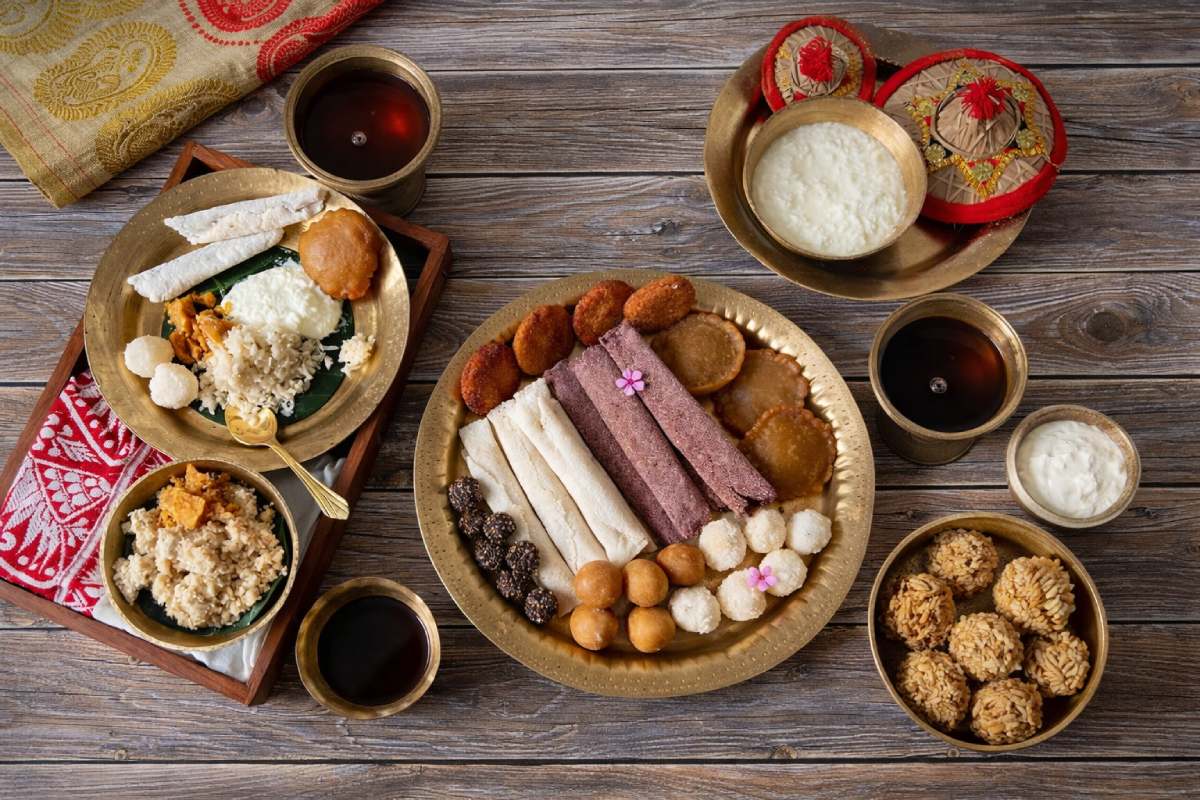
Magh or Bhogali Bihu is incomplete without traditional delicacies made of the freshly harvested produce. In the days leading up to Bhogali Bihu, the womenfolk start preparing traditional snacks called ‘pithas’ using the ‘dhenki’, a wooden pounding device used for threshing paddy and grinding rice.
Most forms of pithas are rice-based and require intense care and meticulous techniques. Sunga-pitha, Bora-dhan, Beji-dhan, and Sokua-dhan are some famous snacks made during Bhogali Bihu.
Today, many families in Assam have given up on farming and moved to the cities, ultimately giving up their tradition of preparing handmade pithas.
Packaged pithas are readily available in markets. This makes them convenient for those who lack time or the skills to make them. However, in many rural settlements in Assam, the practice of handmade delicacies is still alive and thriving.
Traditional Bhogali Bihu Wishes In Assamese
- Happy Bhogali Bihu 2026
Meji Jwalao, Bihu naca, pitha bhoj khor, xopun aru xanti ne jibon bhorisu!
- Bihu utsavor shubhechcha janalo
- Bihu utsavor shubhechcha pradan korilo
- Shubho Nobanno 2026!
Dhan koriya r xopun, pariyal milon, Bihu geet goi, xukha bhora nobo barxo!
- Bihu utsavor shubhechcha aponalokloi
Summing Up
Bhogali Bihu or Magh Bihu is an important celebration in Assam marking the end of the harvest season. As the season of spring arrives with its full-fledged blossom, the communities in Assam welcome it with open arms and unbridled joy.
The festival of Bhogali Bihu is symbolic of new beginnings, prosperity, and community bonding. It is an important cultural heritage of Assam that must be preserved.